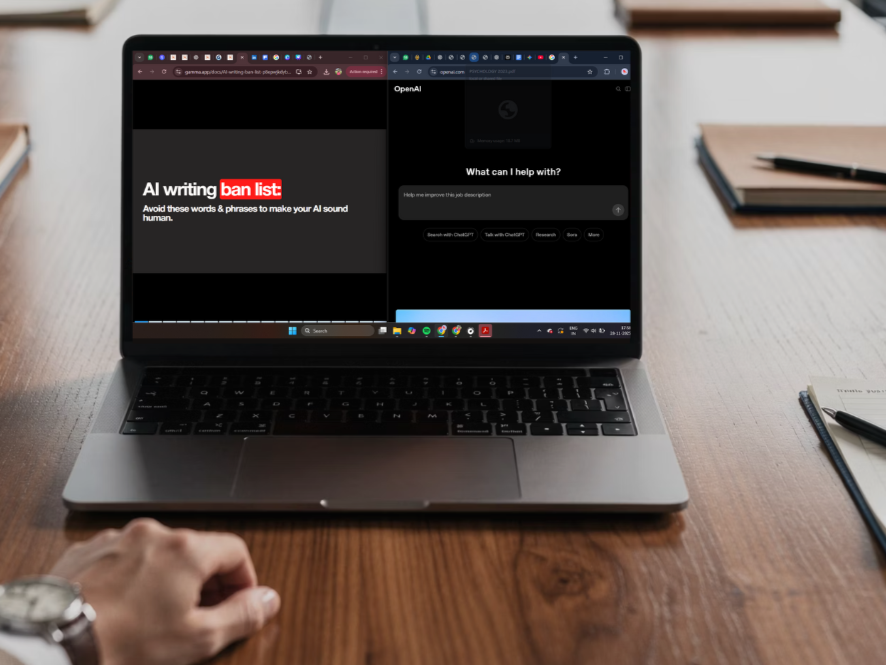
The AI writing ban list.
A PDF that teaches your AI to stop sounding like everyone else’s.
This comprehensive AI Writing Ban List contains over 200 robotic phrases, buzzwords, and structural patterns that instantly expose AI-generated content, organized into 12 detailed categories from the worst offenders (contrastive patterns like "It's not X, it's Y") to corporate jargon and clichéd openings. Transform your AI writing from obviously artificial to authentically human by eliminating these telltale signs that scream "bot wrote this" – complete with substitution strategies and setup instructions for ChatGPT, Claude, and other AI tools.
Sound Like Yourself, Even When AI Writes For You.
Most people open their AI tool and start typing.
Then wonder why their content sounds like everyone else’s.
Your voice gets flattened.
Your ideas lose their edges.
Your brand becomes another echo in the feed.
This document changes that.
The AI Writing Ban List. Your safeguard against sameness.
This is the reference guide you upload to your AI so it writes in a way that feels more like you.
No stiff patterns. No predictable filler. No accidental corporate tone.
Just clear, grounded language that matches how you actually speak.
The core instructions (page 2) make it simple: avoid the patterns that flatten your voice, rewrite when they appear, and stay close to natural, human expression .
Why people buy it
Because they’re tired of explaining to their AI what not to do.
Because editing out clichés takes more time than writing from scratch.
Because tone is the new competitive advantage, and most brands are losing it.
If you care about your voice, or your client’s voice, this document is the simplest way to protect it.
What’s inside.
A clear, practical breakdown of everything AI tends to misuse:
The negation patterns that instantly reveal “AI wrote this” (page 3)
The power words and buzzwords that drain your message of meaning (page 4)
The transitional phrases that make writing feel formulaic (page 5)
The corporate vocabulary that dulls personality (page 8)
The filler lines, metaphors, and similes everyone overuses (pages 6–7)
The formatting tells that make text look machine-made (page 9)
Plus substitution strategies so your AI always has a better choice (page 16)
Upload it once.
Your AI follows it forever.
This comprehensive AI Writing Ban List contains over 200 robotic phrases, buzzwords, and structural patterns that instantly expose AI-generated content, organized into 12 detailed categories from the worst offenders (contrastive patterns like "It's not X, it's Y") to corporate jargon and clichéd openings. Transform your AI writing from obviously artificial to authentically human by eliminating these telltale signs that scream "bot wrote this" – complete with substitution strategies and setup instructions for ChatGPT, Claude, and other AI tools.
Who it’s for.
Founders and leaders who want to protect their voice
Creators building a recognizable style
Agencies training teams or interns
Anyone who’s tired of editing lifeless AI output
And especially the people who care about sounding human.
Common questions.
“Will this limit my AI?”
No. It frees it. The list doesn’t shrink your vocabulary. It removes the clutter so your real tone can stand out.
“Will my writing become bland?”
Quite the opposite. Bland writing comes from the very phrases that this document blocks.
“Is it complicated to use?”
Three steps: upload → reference it in your instructions → watch the tone shift.
(These steps are spelled out clearly on page 15 for ChatGPT, Claude, and other tools.)
“What if AI finds new clichés?”
You can update the list as your own patterns evolve. The doc includes guidance for that (page 17) .
Why it works.
Because it removes the behaviors that make AI sound artificial.
Because it’s grounded in real human voice.
Because it was designed to protect distinctiveness, not polish it away.
Because it aligns with everything The Think Room stands for: clarity, intention, and sounding like yourself, everywhere .
Your AI should write in your voice. Not the internet’s.
If you want your content to feel alive again, and if you want your AI to stop guessing and start reflecting who you are, this document is the place to start.
Give your voice its shape back.
Get the AI Writing Ban List below!👇🏼
This comprehensive AI Writing Ban List contains over 200 robotic phrases, buzzwords, and structural patterns that instantly expose AI-generated content, organized into 12 detailed categories from the worst offenders (contrastive patterns like "It's not X, it's Y") to corporate jargon and clichéd openings. Transform your AI writing from obviously artificial to authentically human by eliminating these telltale signs that scream "bot wrote this" – complete with substitution strategies and setup instructions for ChatGPT, Claude, and other AI tools.