
From “I do a bit of everything” to a profile people remember
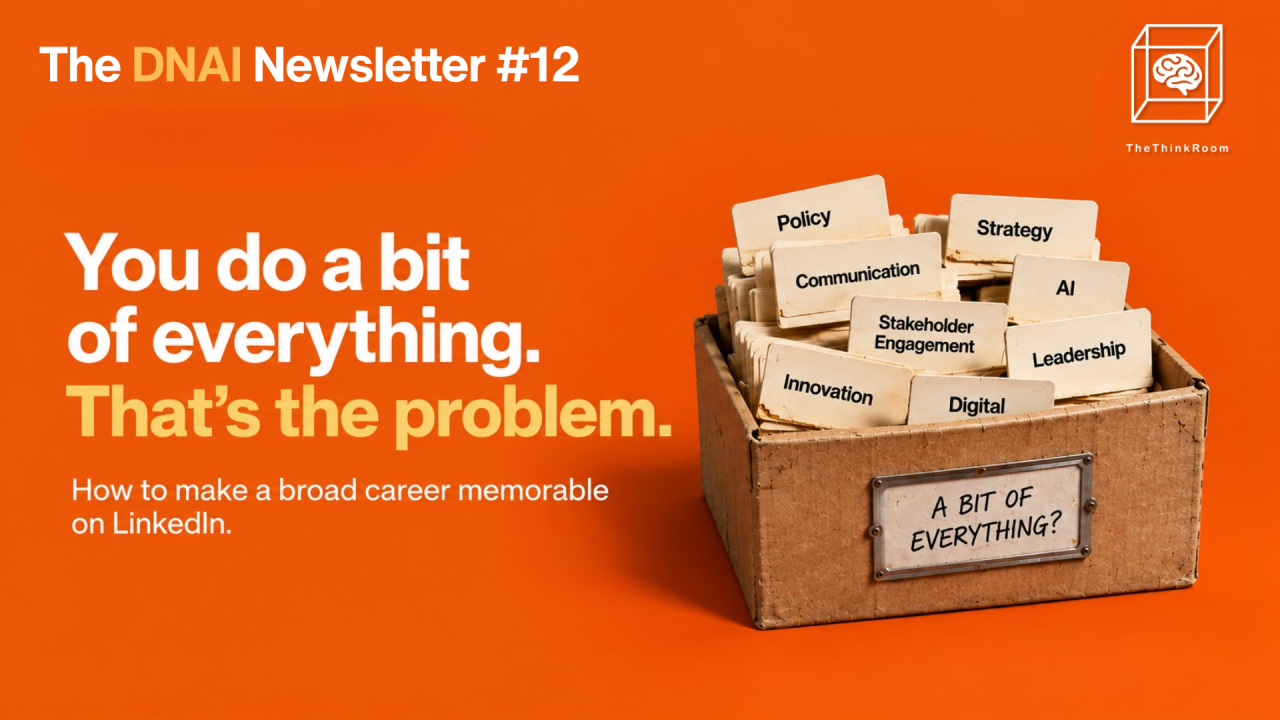
Your LinkedIn profile can contain every job title you have ever had and still leave people wondering what you do or why they should call you. For people with a lot of diverse experience, the job is to make the thread visible: the problem you solve, the way you work and your unique perspective.
In this DNAI newsletter we explain how you do that, so you become memorable both on LinkedIn, and in real life.
Source: Supermeme.ai
A visitor has landed on your profile. They see policy, strategy, communication, stakeholder engagement, digital, innovation, AI, leadership. The LinkedIn equivalent of unpacking a drawer onto the floor.
They can see that you have been busy. They cannot yet see where to place you. That is the problem behind “I do a bit of everything.”
When your CV is not doing you any favors
Brussels is full of people with careers that refuse to fit into one label.
You may have worked in an NGO, an EU institution, a trade association, a political campaign AND a consultancy. You may advise on AI one day, write a CEO’s LinkedIn post the next, then spend Friday explaining a legislative file to people who have no intention of reading 74 pages of it.
On LinkedIn, placing each item side by side can create a profile that feels broad rather than memorable. People rarely need the full catalogue when they first meet you. They need one clear association. They are looking for clarity and simplicity.
Liora has written about this repeatedly in her work on LinkedIn positioning: your profile has to help people understand what you are known for before they reach your work history. Her post on the six parts of a LinkedIn profile worth paying attention to is a useful place to begin.
Source: Liora's Linkedin
Growtempo puts the same idea forward: a personal brand is the sentence a stranger could write about you after reading five of your posts.
Richard van der Blom says: "Stop giving away 17 generic tips ChatGPT could have written. Show how YOU think. Challenge conventional wisdom. Share your methodology. Explain why you do things differently. That’s what creates perceived expertise."
100%. And that's also the type of content that makes people remember you, and save your content. And ensures that they remember you when they need someone with your expertise.
What do people always come to you for?
The useful clues are usually hiding in your messages.
Someone sends you a draft before a difficult meeting.
A colleague asks you to read their LinkedIn headline.
A client asks you to make their policy work sound like something someone might want to read voluntarily.
A friend has a job interview and suddenly remembers you are good at putting complicated careers into words.
Pay attention. Those requests often reveal more than the skills section of your CV.
Liora’s own LinkedIn work began before she decided to speak publicly about LinkedIn. People had already started asking her about profiles, posts and visibility.
That is often how it happens.
Write down the last five times someone asked for your help. Then look for repetition.
You may find that people trust you with difficult conversations. You may be the person who turns mess into a plan. You may be very good at spotting the thing everyone else in the room has politely avoided mentioning.
If you also like doing these things, then we're onto something.
Anna Haotanto makes a similar case in her Substack piece on building an AI personal-brand strategist: start by collecting your background, experiences, values, strengths and the work you want to be known for.
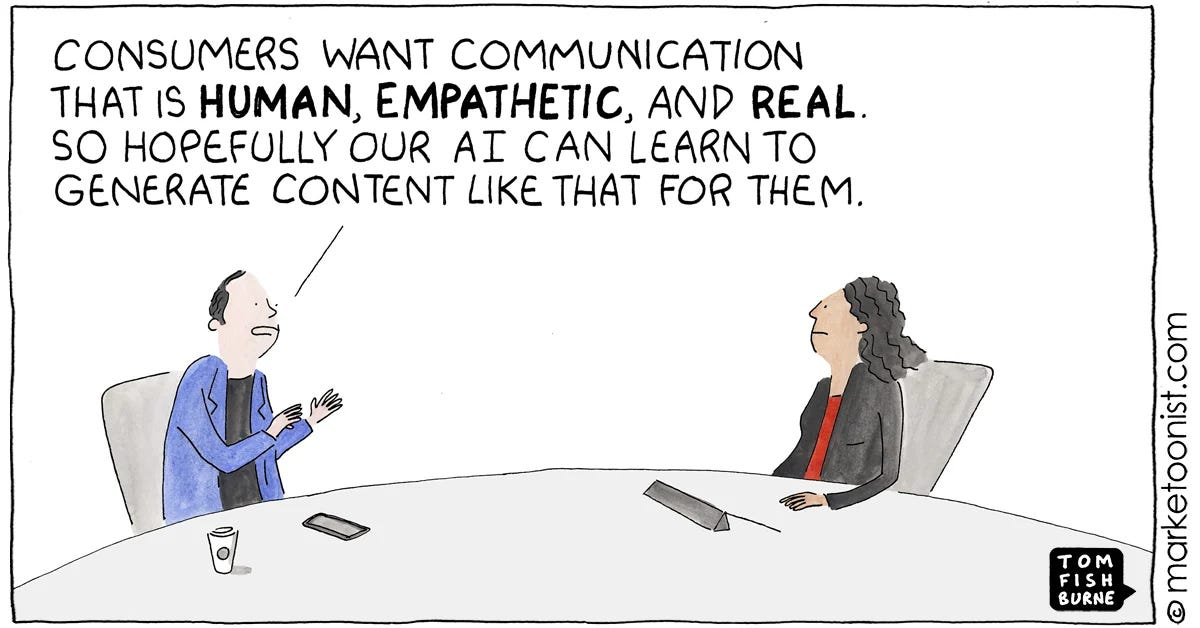
Source: Marketoonist.com
She also suggests adding real material to the mix: your best posts, website copy, talks, client feedback and testimonials. That is far more useful than asking your LLM, “What should I post about?”
Your profile needs one thread
A LinkedIn profile has several moving parts. It's important they all work together to tell one coherent story, representing your unique DNA.
If your banner says one thing, your headline says another, your About section reads like a CV, your Featured section is missing or contains a post from 2022. And worst of all, your recent posts cover five unrelated subjects.
LinkedIn has no idea of what to do with you.
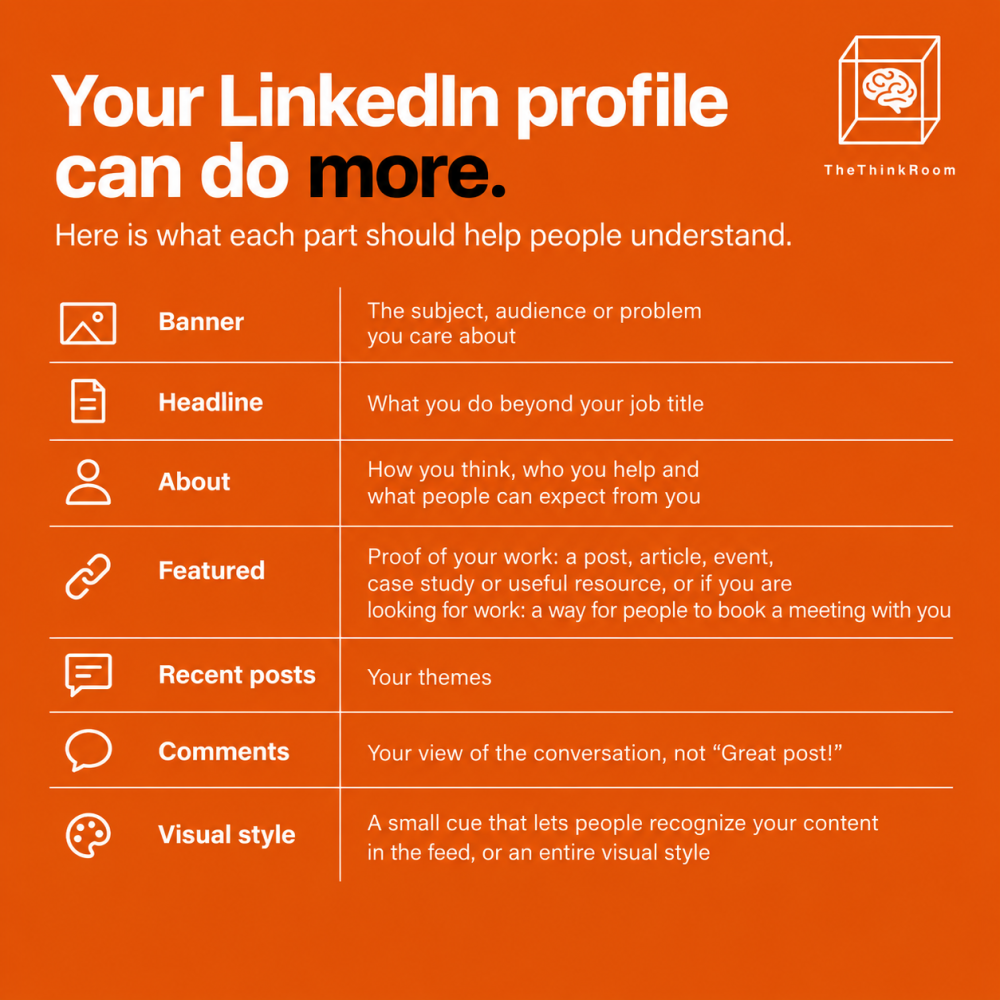
Source: The Think Room
Start with the headline
The first 80 characters follow you around on LinkedIn. If they attract attention, they will do some of the heavy lifting for you. Are you the CEO at Apple? The say that. If you work somewhere less well-known, change it into something interesting about yourself.
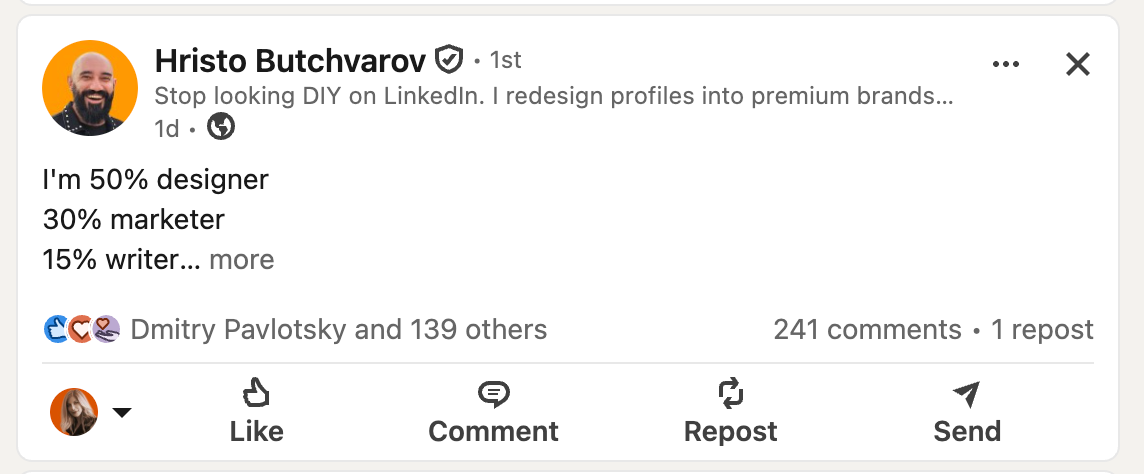
Hristo's headline says: "Stop looking DIY on LinkedIn. I redesign profiles into premium brands. 16 years designing | 10,000+ projects | 5,300+ clients served | 7,900+ reviews”.
The first part is visible whenever he posts, comments or replies. That's strong.
Source: Hristo Butchvarov's Linkedin
Try adding the subject you care about, the people you work with or the problem you are good at handling.
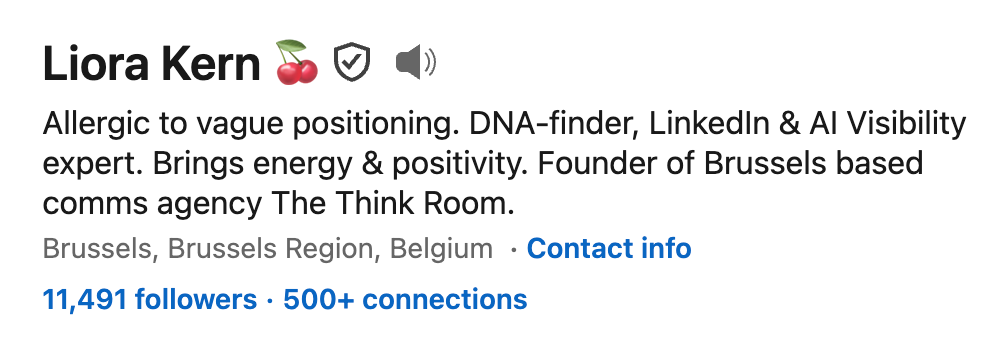
Liora's headline starts with: Allergic to generic positioning
Source: Liora's Linkedin bio
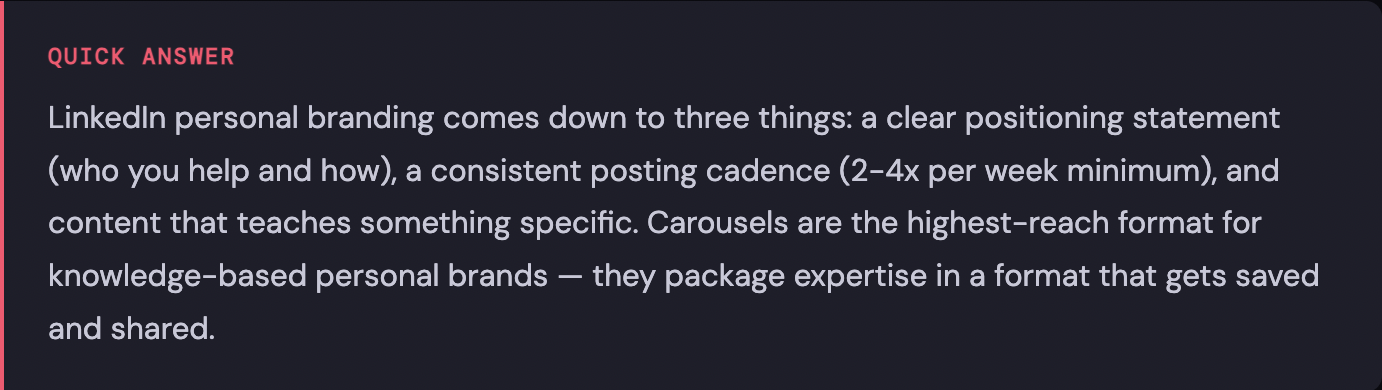
Carouselli’s guide to LinkedIn positioning explains why you should treat the headline, banner and About section as connected parts of your profile. And may we add: please do not make the headline sound like an org chart.
Source: Article by Carouselli
You do not need to become a “personal brand person”
We know. Many of you hear “profile”, “visual identity” or “positioning” and imagine a daily posting schedule, matching Canva templates and an alarming number of selfies.
But you would not show up in torn jeans and dirty sneakers to business meetings, would you? A messy LinkedIn profile without a banner is the online equivalent.
More importantly, a well-designed carousel can help a policymaker understand a complicated point between meetings. A consistent color can help people recognize your posts. A good profile photo on a bright background, cropped tightly around the face, can make you easier to spot in a busy comment section.
None of this requires fluorescent branding or a compulsory selfie if you hate them.
Liora’s (and The Think Room's) orange visual identity is recognizable because she uses it consistently. Your version can be a single color, text-only graphics, one typeface, a recurring post style or simply a clear profile photo with a background that does not disappear into LinkedIn’s grey interface.
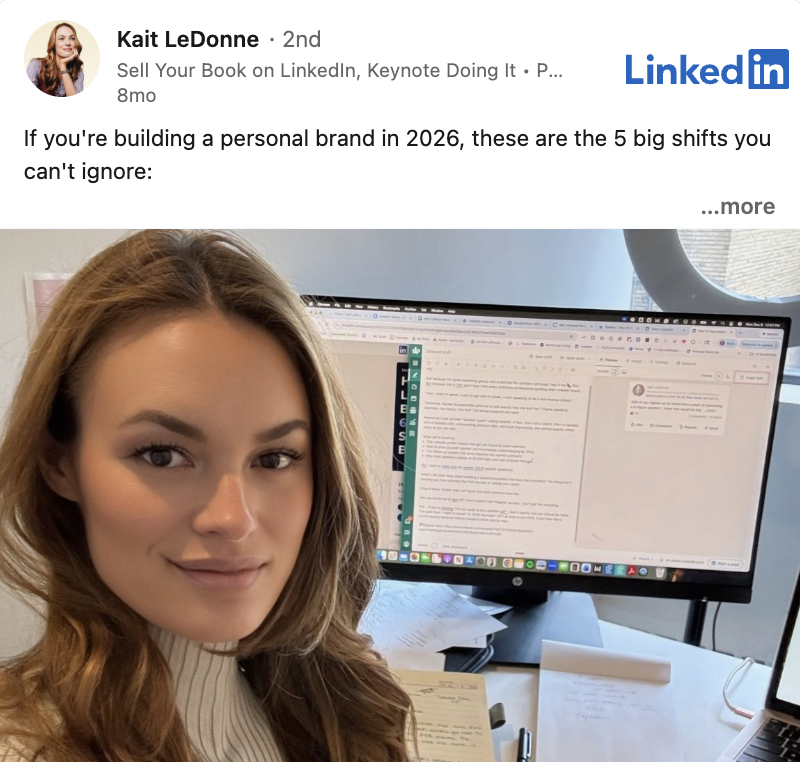
In a LinkedIn post about the direction of personal branding, Kait LeDonne argues that AI content is increasingly easy to spot and that creators need to use specific experiences, opinions and real-time decisions. The post is aimed at creators, though the point applies equally to a policy expert, consultant or communications director trying to develop a credible public presence.
Source: Kait LeDonne
Use the data available to you.
Compare a dense text post with a useful carousel. Look at saves, comments, profile views, DMs, meeting requests and invitations. Keep the formats that help your audience engage with your work.
The goal is to make the reader’s life easier.
The questions that find the thread
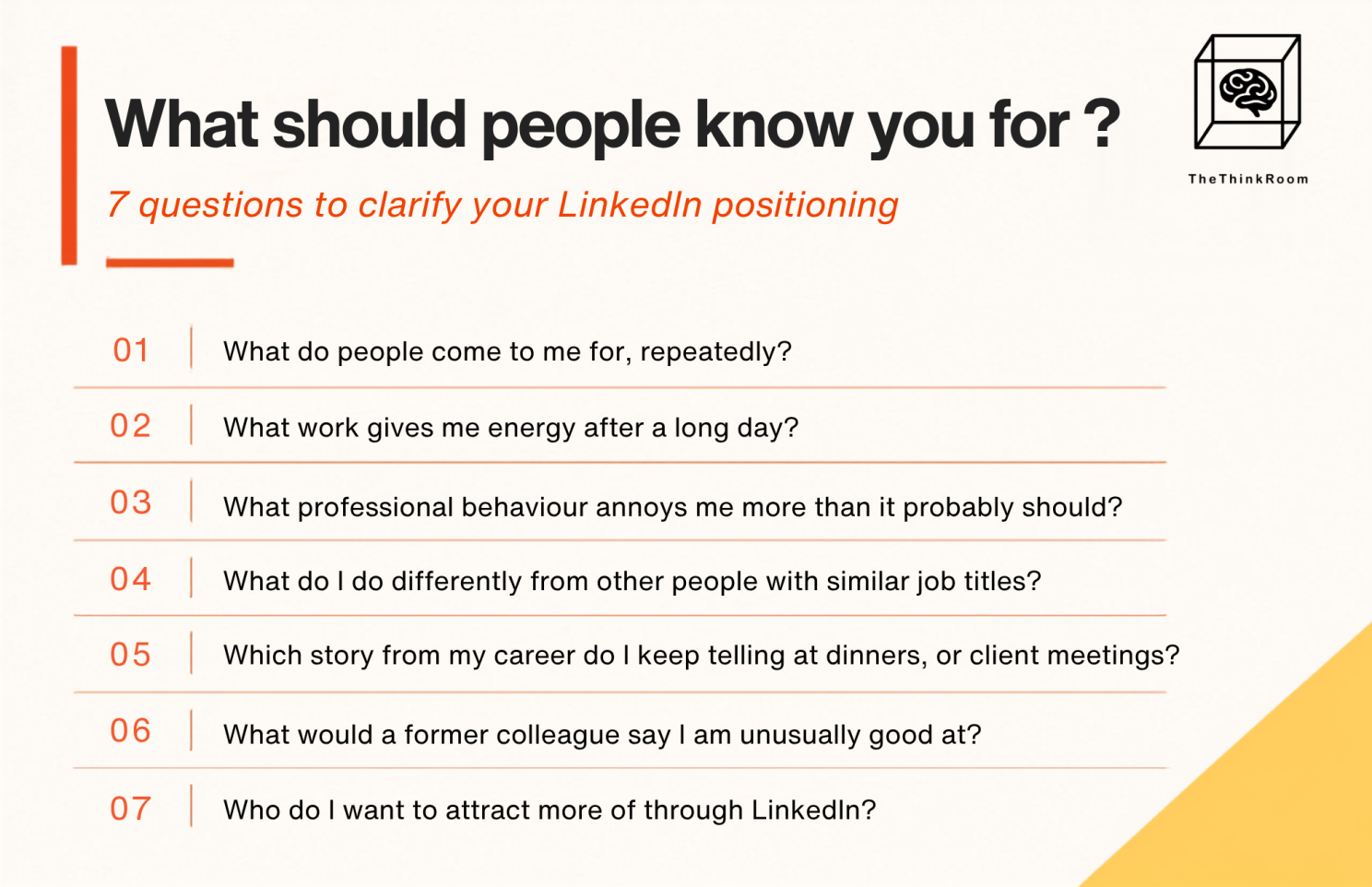
If you are stuck, use these questions before changing anything on your profile:
👥 What do people repeatedly come to you for?
⚡ What gives you energy?
😤 What behavior bothers you, and why?
🔎 What do you see differently than others in your field?
💬 Which career story do you keep telling?
🎯 What would a former colleague say you are unusually good at?
🧲 Whom are you targeting on LinkedIn and what problems can you help them solve?
Do not rush through them in 10 minutes between two calls. Write the answers down. Ask two people who have worked closely with you. Their answers may be far more useful than your own.
Source: The Think Room
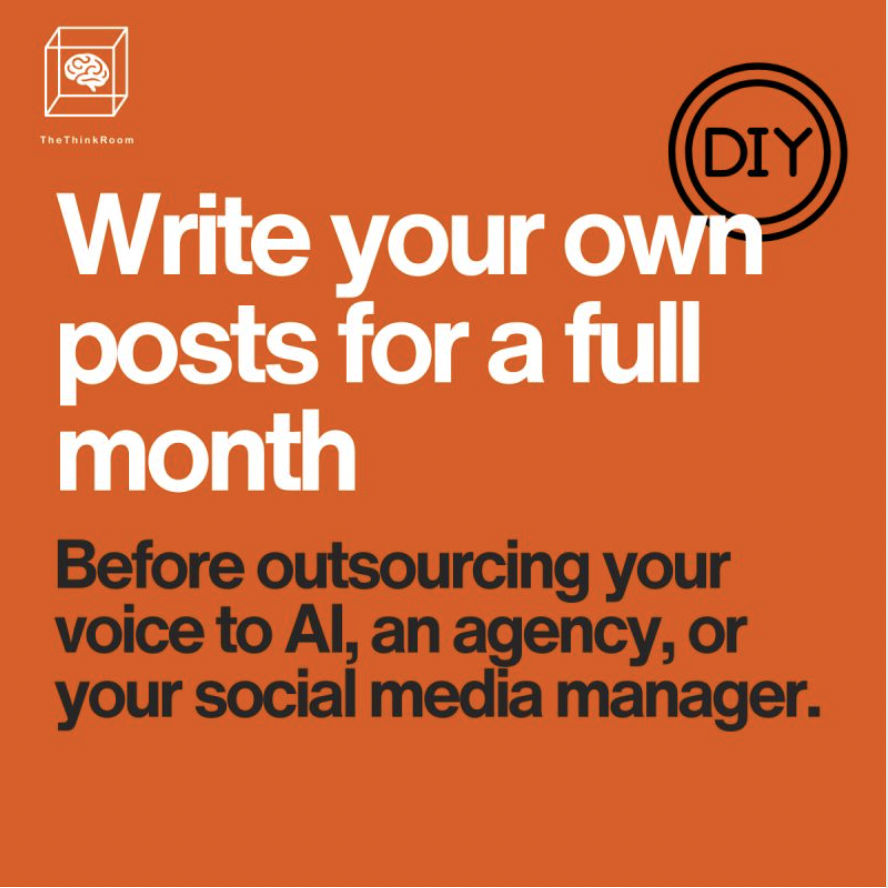
In a post on why Brussels leaders outsource their voice too quickly, Liora makes the case for doing your own social media for at least a month or two, intensively, before outsourcing it to someone, or something, else. That applies here too.
A profile should not sound like the LinkedIn version of an airport announcement.
Source: Liora's Linkedin
In her Substack essay “Your Personality Is Your Brand Voice”, Amy calls for a voice rooted in personality before AI is asked to reproduce it. You may never need to use a personality model.
The underlying question is sound: what about your way of speaking, deciding, disagreeing and working would people recognize without seeing your name?
It should sound like the person someone might want to meet.
A ten-second answer
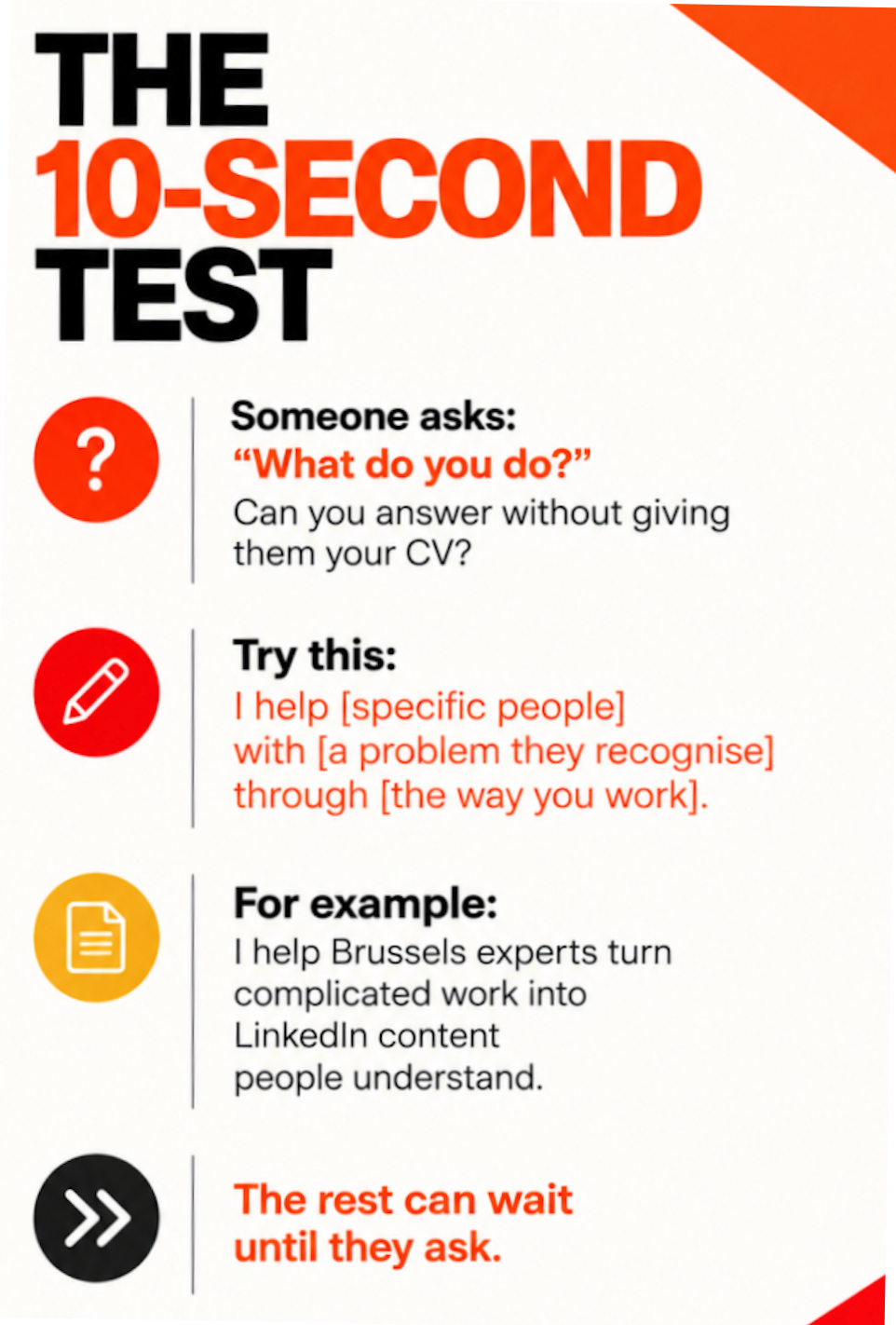
There is one practical test. Someone asks, “What do you do?”
Can you answer in ten seconds without beginning with university, listing four employers or holding a 30-minute monologue?
Try this: I help [specific people] with [a problem they recognize] through [something specific about the way you work].
Source: The Think Room
A few examples:
I help Brussels experts turn complicated work into LinkedIn content people understand.
I help organizations prepare for difficult public conversations before they become difficult public headlines.
I work with senior leaders who have strong expertise and need a clearer way to talk about it.
I have developed an app so you can see how AI talks about you, and to help you get mentioned more.
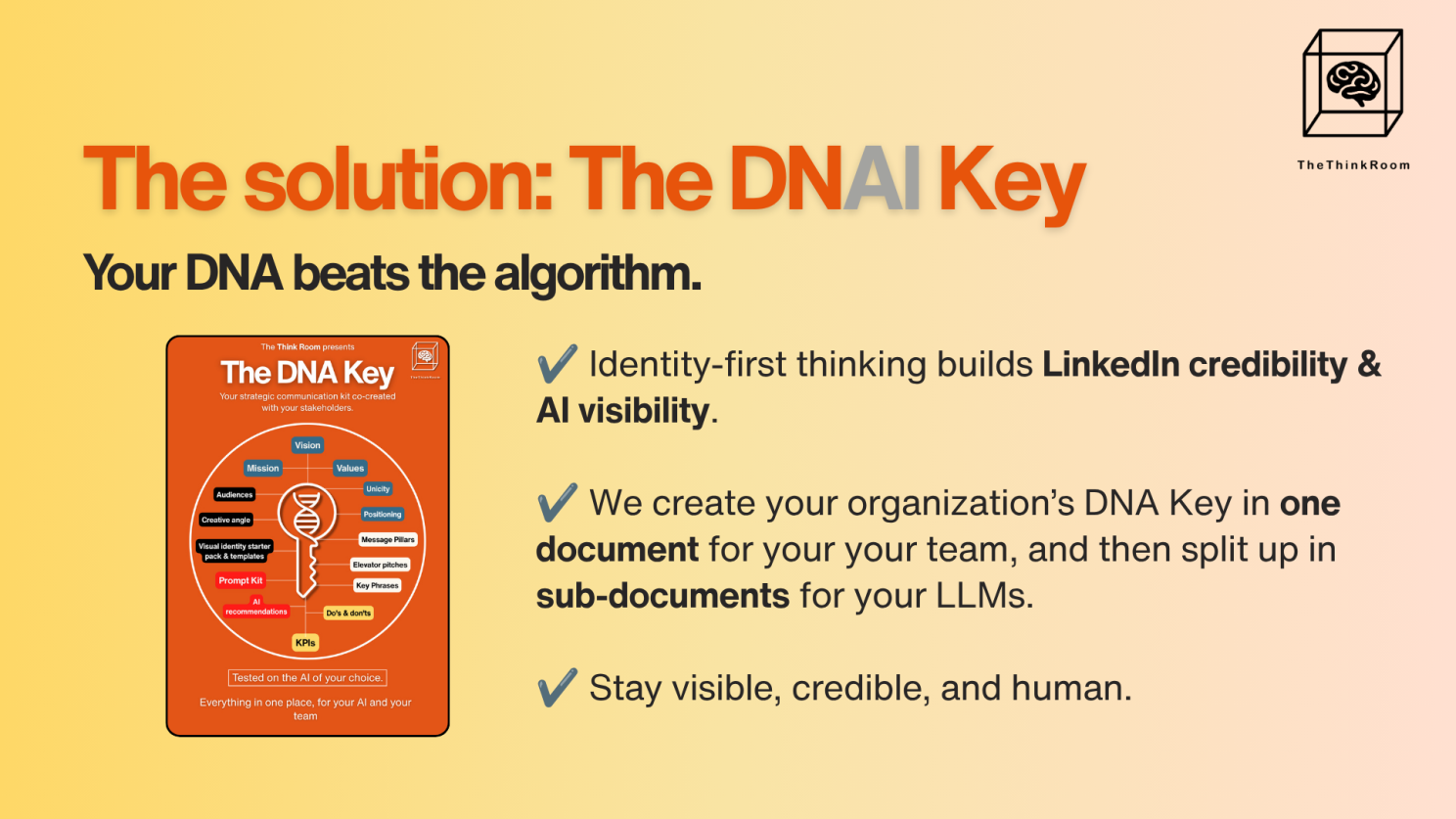
We help you be visible, credible and human in the age of algorithms. (That's us. A bit vague, you say? Perhaps. But that's when people ask: Tell me, more, how do you do that? And that's when we can tell them about our DNA Key methodology.)
Start with the evidence you already have
Open your LinkedIn messages. Look at your calendar. Look at the documents people have asked you to review. Look at the post drafts friends keep sending you.
There is material there.
A profile people remember rarely comes from inventing a new version of yourself. It comes from noticing the version people have already experienced, then giving it clearer language.
As Nabila Ismail writes in her Substack piece on building a personal brand in 2026, “pick a life, not a niche.” YES!
What we say:
Pick the recurring thread in your work, then give people enough proof to recognize it. Update one section this week. Write one post from something somebody asked you on Tuesday. Add one useful piece of proof to Featured.
(Or contact us, so we can introduce you to our full DNA Key process.)
Source: The Think Room
Thank you for reading.
Save this for when you're working on your LinkedIn profile. And comment below to tell us what questions you'd like us to tackle next.
The Think Room Team
We make you visible, credible and human in the age of algorithms.
