
How to turn a 30-minute interview into LinkedIn posts, articles and other useful content.
Practical guidance on solving content creation challenges by capturing your in-house experts' knowledge without making them responsible for writing content.
How to write LinkedIn posts that perform
A practical guide to writing LinkedIn posts that get traction, featuring 12 do’s and don’ts for fall 2026.
Thought leadership for EU professionals in Brussels: what works on LinkedIn
The DNAI Newsletter #19 looks at why Brussels experts need to share their knowledge, build visibility and stop keeping their expertise hidden.
How to make your expertise easier to find on LinkedIn
Your LinkedIn profile might be leaving people guessing. In DNAI Newsletter #18, The Think Room looks at why unclear messaging makes it harder for people to understand what you do, what you stand for and why they should care.
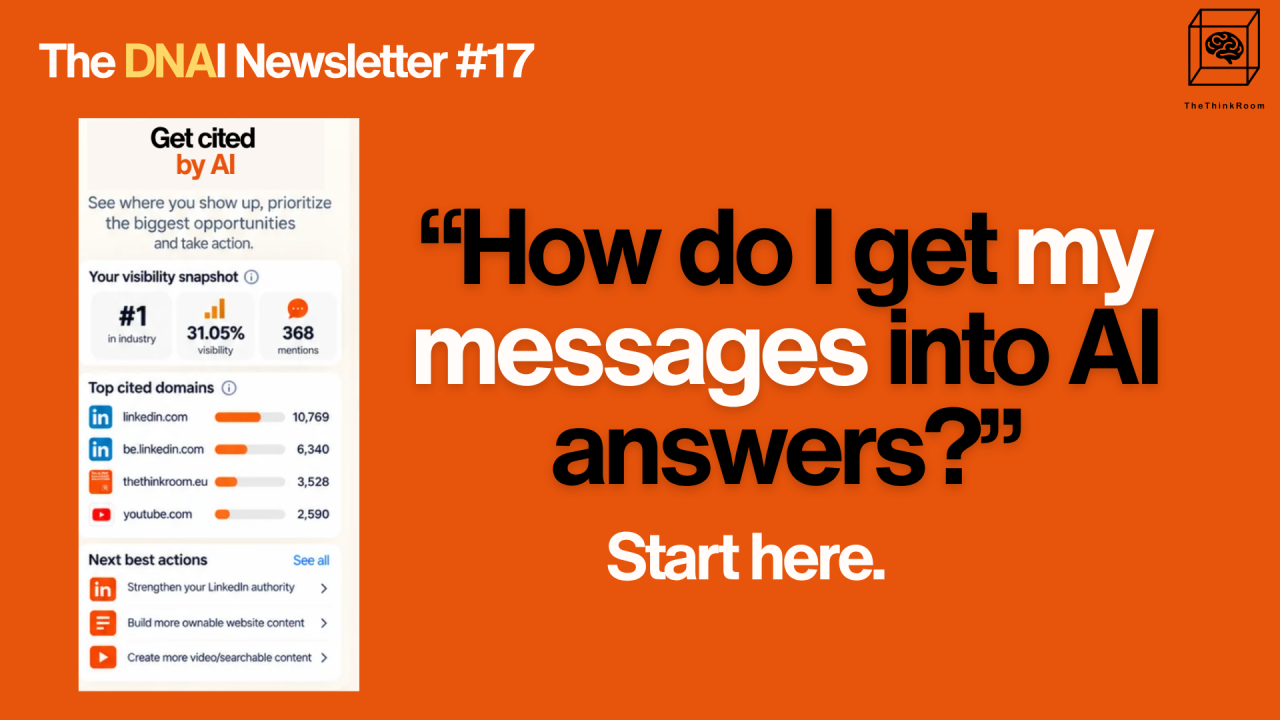
How do you get AI to mention you?
Want AI tools to mention your organization and its ideas? The DNAI Newsletter #17 looks at AI visibility, showing where your content gets cited and which actions can help your messages appear in AI-generated answers.
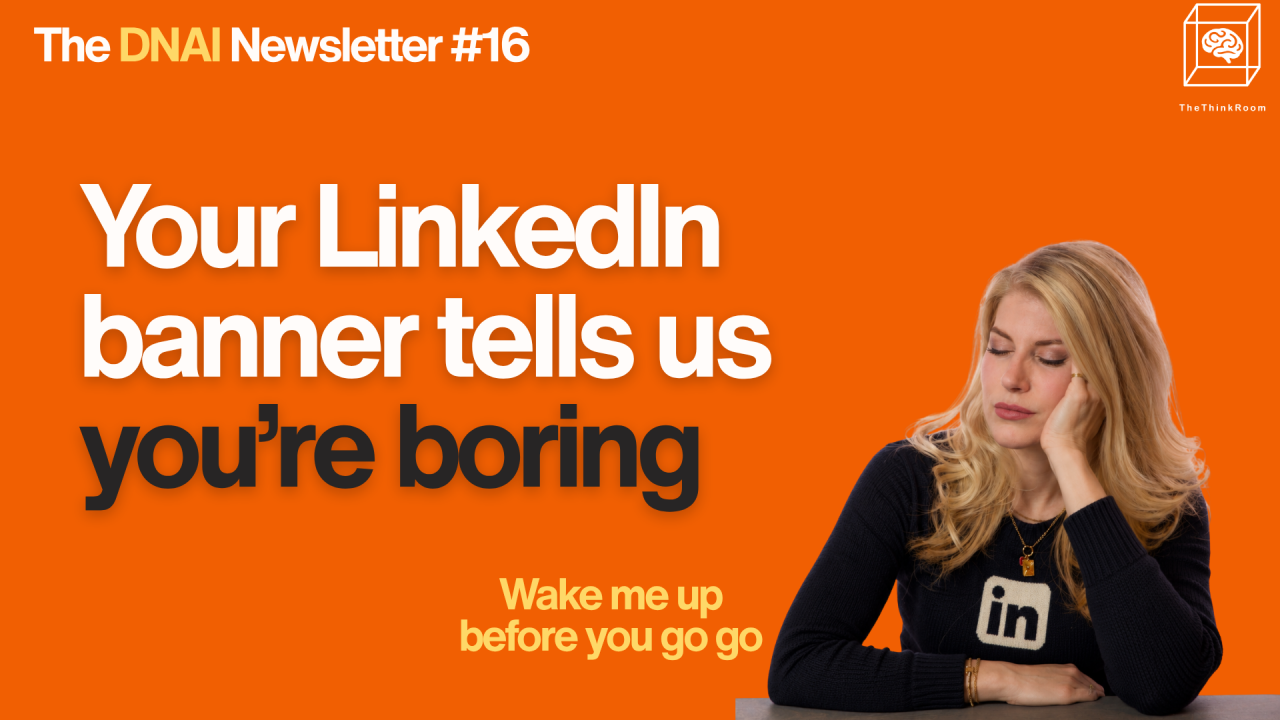
Your biggest LinkedIn space is doing NOTHING for you
Your LinkedIn banner is prime profile space. Does it tell people what makes you worth knowing, or does it give them another reason to scroll past? The DNAI Newsletter #16 looks at what your banner says about you.
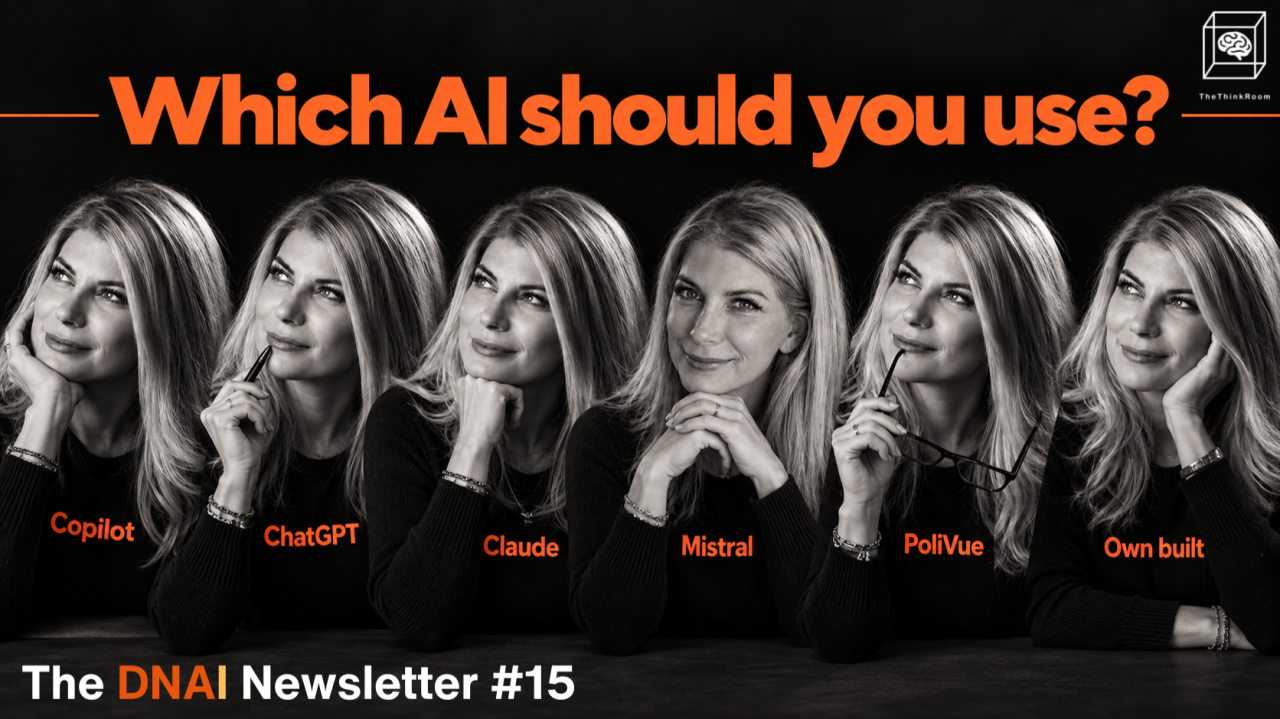
Which AI should you choose?
Copilot, ChatGPT, Claude, Mistral, PoliVue or your own AI tool? The DNAI Newsletter #15 looks at the options and helps you think about which AI makes sense for your work.
What works on LinkedIn in 2026? And what doesn’t?
The DNAI Newsletter #14 looks at the habits, choices and content mistakes that shape how we show up on LinkedIn.
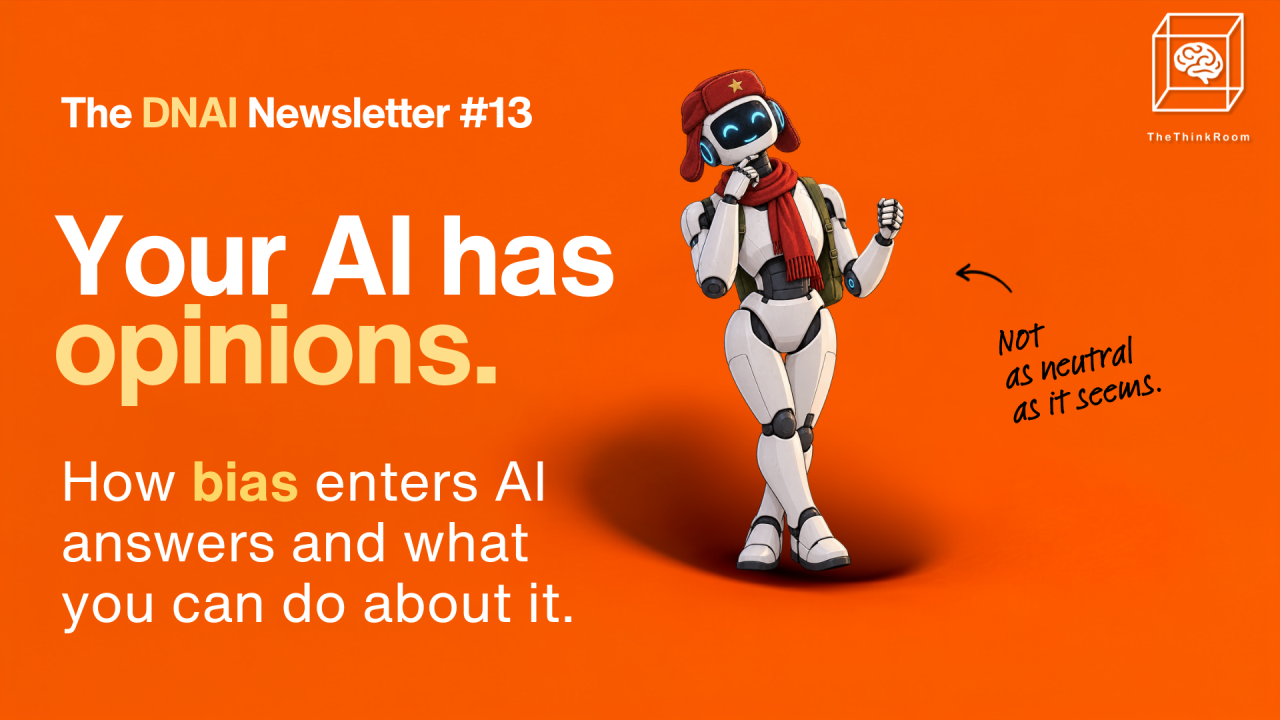
The hidden bias in AI answers and how to get better outputs
AI answers aren’t always neutral. Learn how bias enters AI systems, shapes their responses, and what you can do to get more balanced, reliable answers.
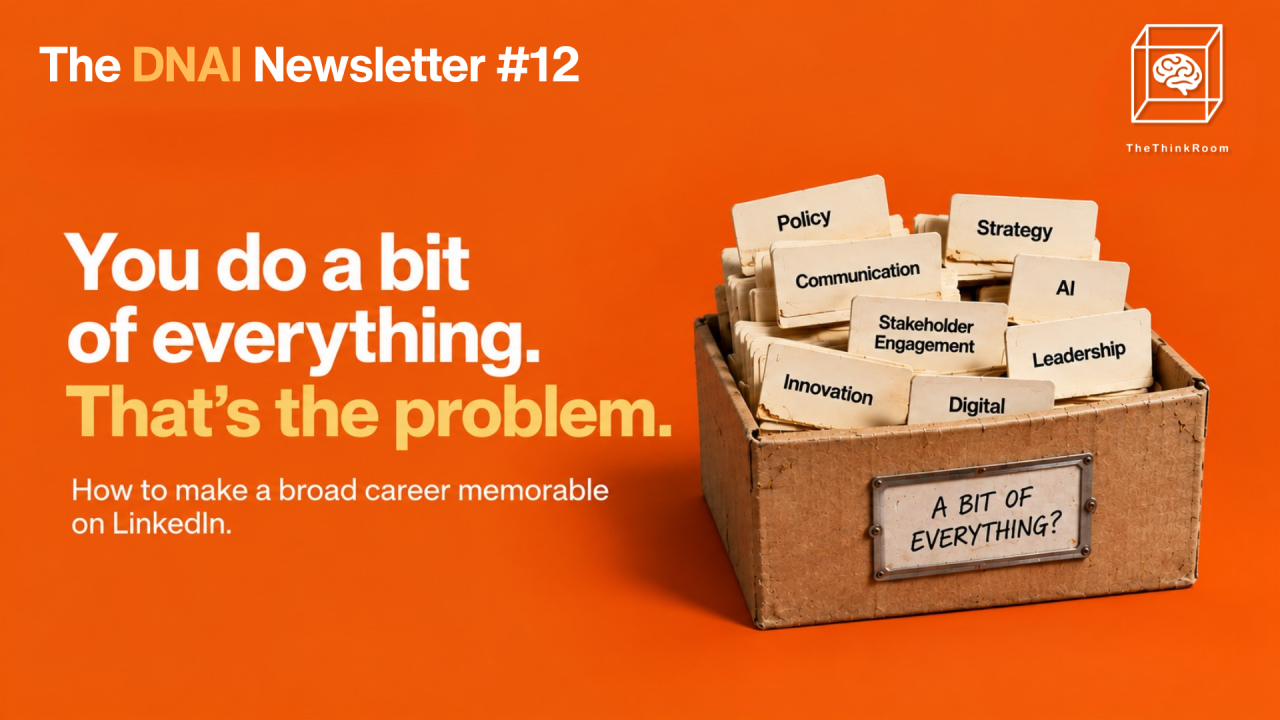
From “I do a bit of everything” to a profile people remember
Learn how to turn a broad career into a memorable LinkedIn presence by finding the focus that makes your expertise stand out.
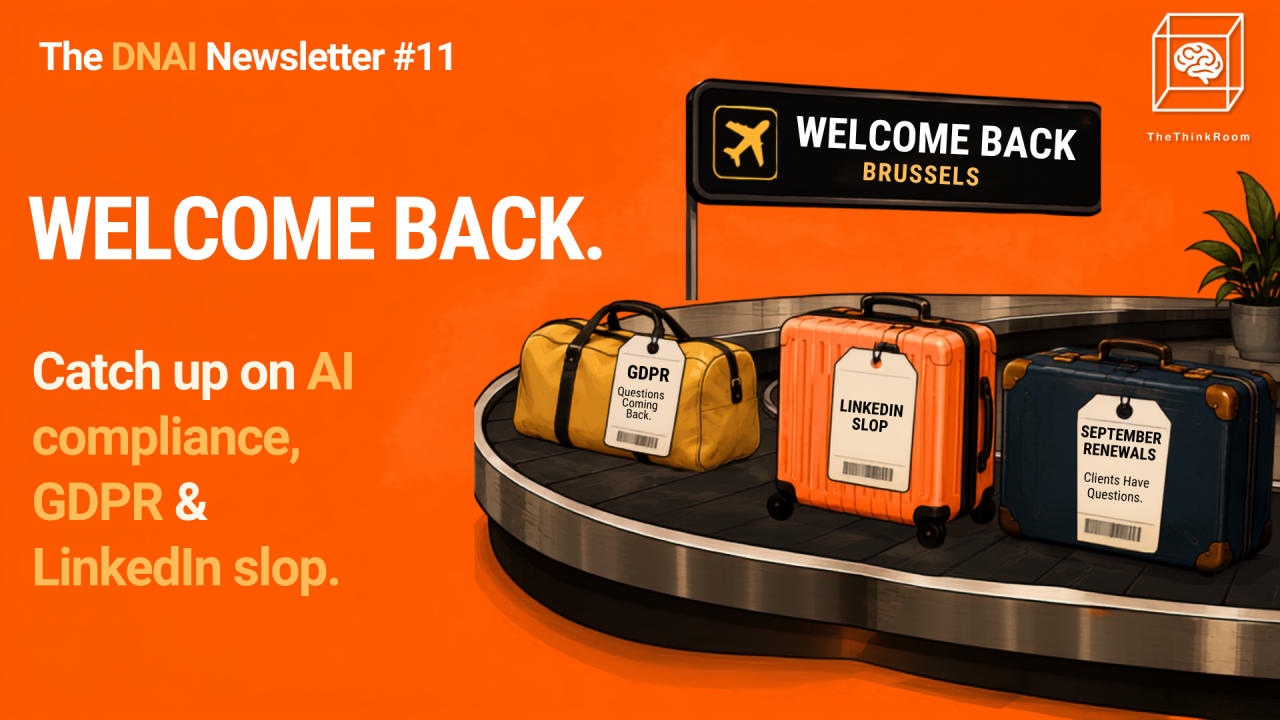
Rentrée rules: what changed on LinkedIn and in AI compliance this summer
Cover image for The Think Room’s DNAI Newsletter #11, featuring a Brussels airport baggage carousel with suitcases labelled GDPR, LinkedIn slop and September renewals, highlighting AI compliance and LinkedIn updates.
How to make your LinkedIn articles easier for AI to find, and quote
The DNAI Newsletter #10 explores how to write LinkedIn articles that AI tools can find and cite, helping your expertise stand out in AI search.

Stop it, LinkedIn. Why are you showing our posts to the wrong people?
A post gets 80,000 impressions. People in Toronto, São Paulo and three people called Mark react to it. Lovely.
Then a more specific post reaches 1,000 people. 35 people save it. A head of communications sends it to her team. Someone you have wanted to work with for six months finally clicks your profile. Two policy directors reach out to you.
We know which post we would keep.

Networking season is coming to Brussels. A survival guide.
So: Let’s talk about networking.
Because it's not as easy as it looks. You may need, or desperately want, a new job. You may need clients. You may want to become a musician and want to find people to give you gigs. You may want to lobby.
In this newsletter we talk about the do's and don'ts. In the real world, and also on LinkedIn.

Stop babysitting AI. Build workflows instead.
If you are a human being who can read the screen in front of you, you have all the “technical skills” you need to automate your workflows today.
But there is a right way and a wrong way to approach this. Below our AI automation tips for you.

AI-free ways to never run out of ideas again
Every week someone tells us the same thing: "I know I should post more. LinkedIn is an important channel. I just don't know what to write."
This week we'd like to help you with that. The first step, as always, is to define your DNA, and establish your niche.
And in this very newsletter we go a bit deeper into the most important ones - with examples.

Your hook is doing 50% of the work. The other 50% is your DNA.
A field guide to writing LinkedIn posts that the new interest-graph algorithm distributes, without sounding like every other post in the feed.

LinkedIn came to Brussels with "tips". We brought our data.
What LinkedIn people say, and why we disagree.
Hello everyone,
In this DNAI newsletter: what LinkedIn told a room full of Brussels communicators (and what our data says instead), why video keeps disappointing everyone (although, is it?), which days are worth posting on, and what to do when your brand-new content strategy seems to make things worse.

Your AI budget vs. reality: Tools that help with comms
You’re busy, yeah? We know!
We’re all experiencing this “almost summer holiday” feeling in Brussels. And somewhere in the middle of that, we kept getting one question from our clients:
Which AI tools are actually worth paying for if you work in communication or public affairs?

Better visibility starts with better decisions
Brussels feeds are full of people and organizations who don’t know what to post, or post often and still don’t have any reach.
This newsletter looks at recurring topics from our work with EU professionals and organizations: identity, how to create save-worthy content, how to create good visuals with AI, and AI visibility (GEO).