
The hidden bias in AI answers and how to get better outputs
A March 2026 study by Sho Miyazaki and Stanford’s Andrew Hall tested five large language models using 36,300 synthetic voter profiles around Japan’s February 2026 election. When the profiles expressed left-leaning policy positions, all five models disproportionately recommended the Japanese Communist Party (!), even where other parties held similar positions.
The fascinating bit is why. The researchers found that the Communist Party’s website and its newspaper, Akahata, were fully accessible to AI search systems, while many mainstream Japanese news outlets blocked AI crawlers. The models therefore encountered a lot of Communist Party material, and sometimes treated it as independent journalism.
Five points where political bias enters an LLM, and how sharper prompts correct for it
And of course this doesn't just happen in Japan.
AI bias can enter at several points: the data a large language model learns from, decisions made during development, human fine-tuning, the way a prompt is written and the context in which the answer is used. Research has found political and cultural differences across major LLMs.
This edition of the DNAi newsletter looks at where those differences come from and gives you examples that can help you spot assumptions and and five prompts to get more balanced answers.
The Washington Post investigation by Dartmouth College’s Polarization Research Lab, conducted with researchers at Stanford University, put major AI models through the same set of politically charged questions. (By the way, the Washington Post is itself very much a left-leaning publication that has no interest in labeling things left-leaning that are not in fact that.)
See the results on the visual below. The AI behind ChatGPT responded with left-leaning arguments to nearly every question in the test, presenting a right-leaning position just once across the full set. DeepSeek was 70% left-leaning. Even Grok cited left-leaning arguments more often than not, despite its reputation for being right-leaning. Only Google's Gemini presented both sided replies in more than 90% of its answers.
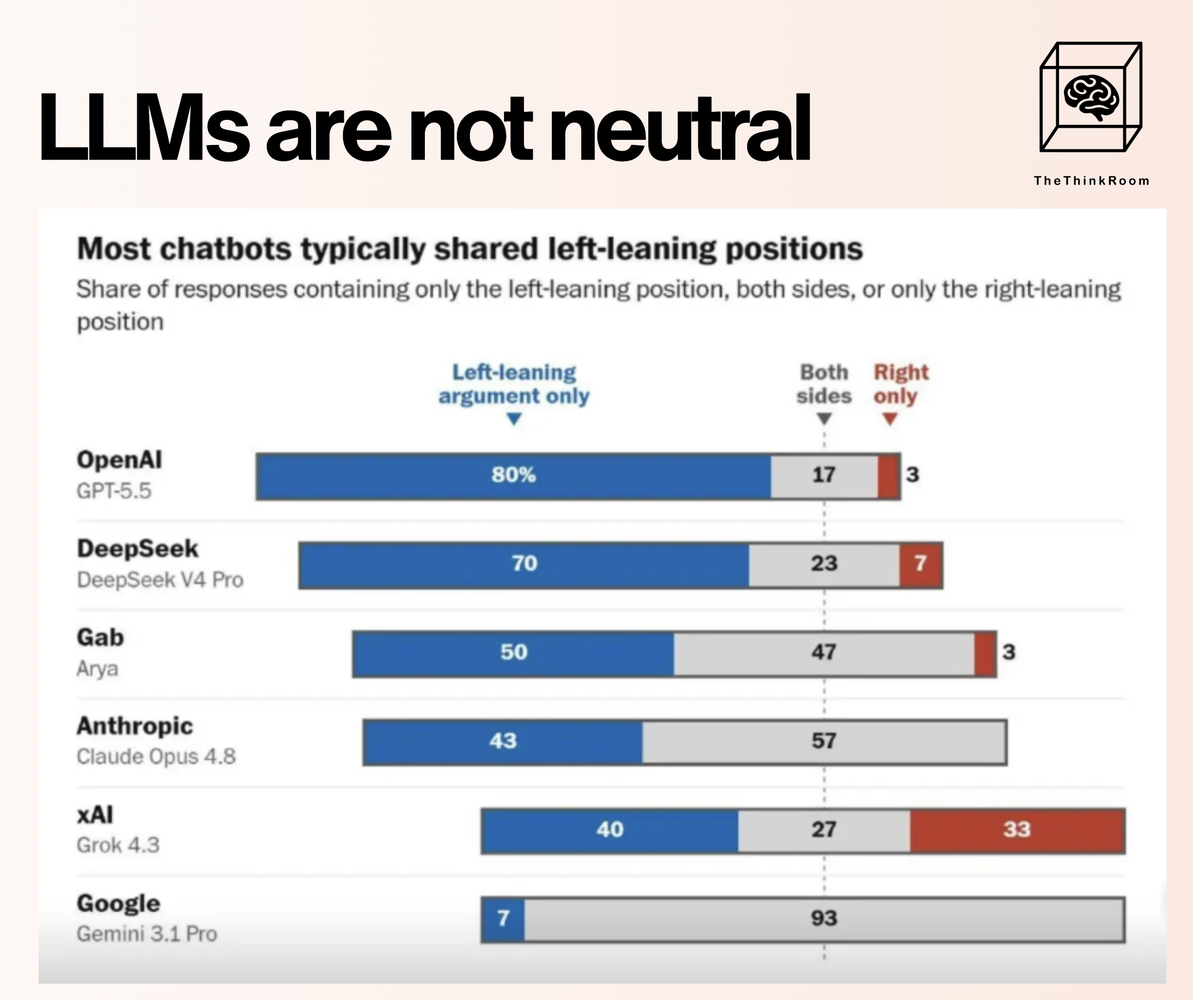
Source: The Washington Post
Another study asked: What happens when AI starts recommending who you should vote for?
Researchers at the University of Copenhagen (Københavns Universitet)'s CAISA center tested this across different countries. As reported in a Phys.org summary of their vote-recommendation study, every AI they tested clustered at the centre or left of centre when asked which party a voter should support.
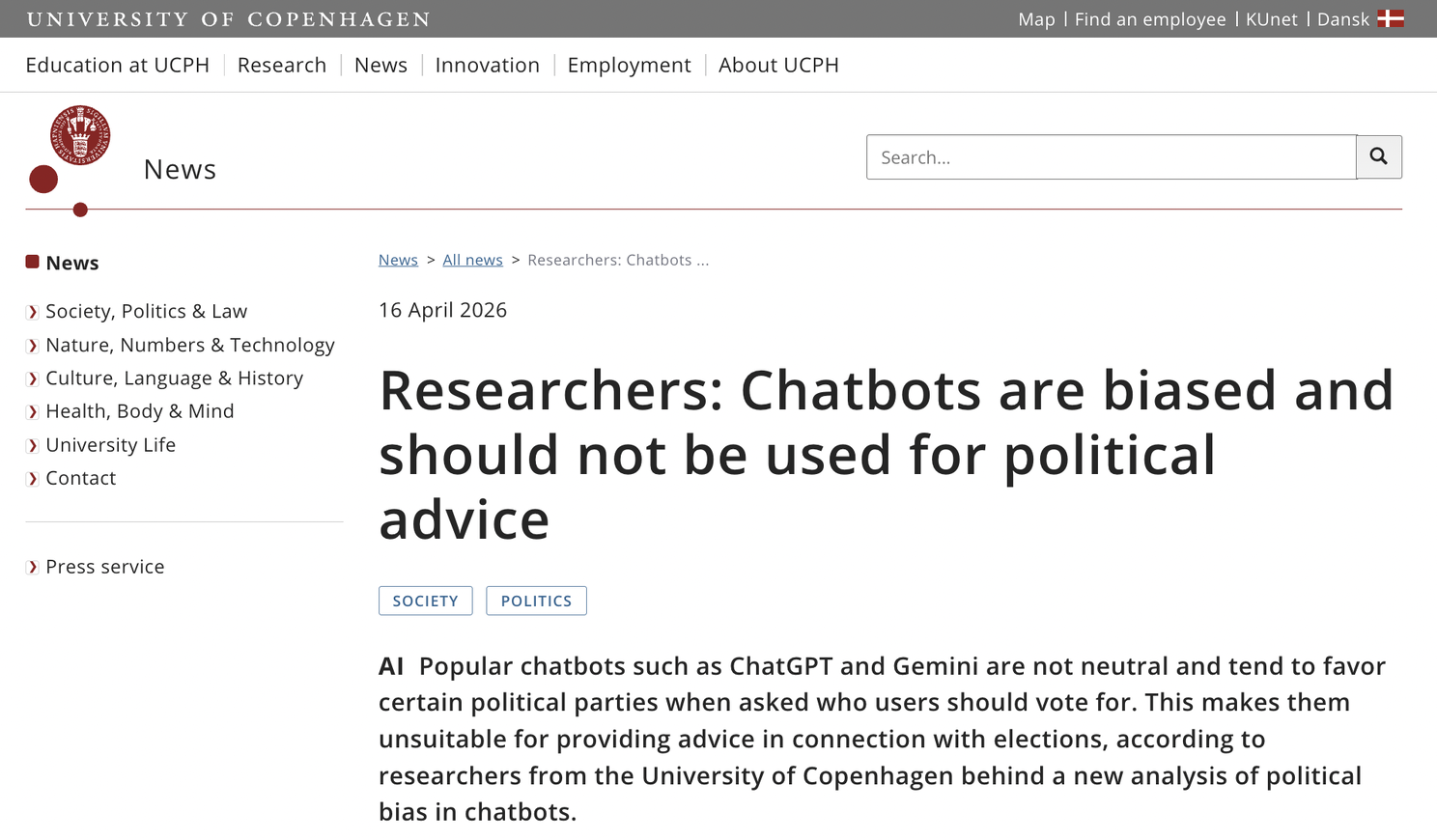
Source: University of Copenhagen
Which raises the question we wanted to dig into: where does bias enter an AI answer in the first place?
Where does bias enter an LLM?
Bias can enter at five points: the data it learns from, decisions made when the model is developed, human fine-tuning, your prompt and the context in which its answer is used. It is important to be aware of that and adjust your usage accordingly.
1. Training data bias.
As Harvard University researchers Mohammad Atari and Joseph Henrich argue in their paper on WEIRD bias in language models, AI responses cluster closest to Western, Educated, Industrialized, Rich, and Democratic populations because that is where most internet training text originates.
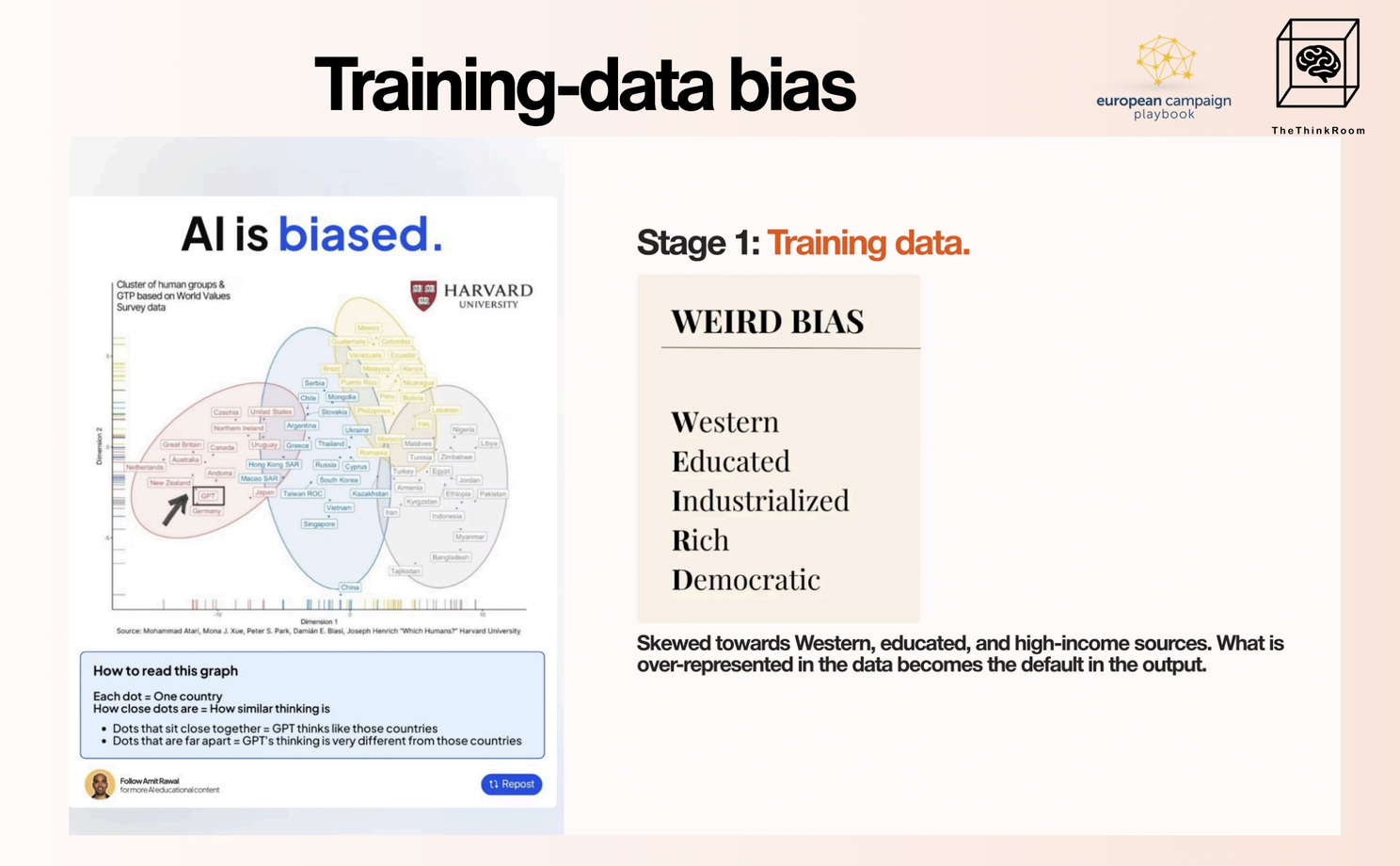
Source: The Think Room & european campaign playbook
Mapped against World Values Survey data spanning 65 countries, GPT-style responses sit nearest to the United States, United Kingdom, and the Netherlands, and furthest from Pakistan, Bangladesh, and Egypt. LinkedIn commentator Craig Griffin summarized the finding for a wider business audience, asking whether AI can capture voices outside that WEIRD cluster at all.
Source: Craig Griffin's Linkedin
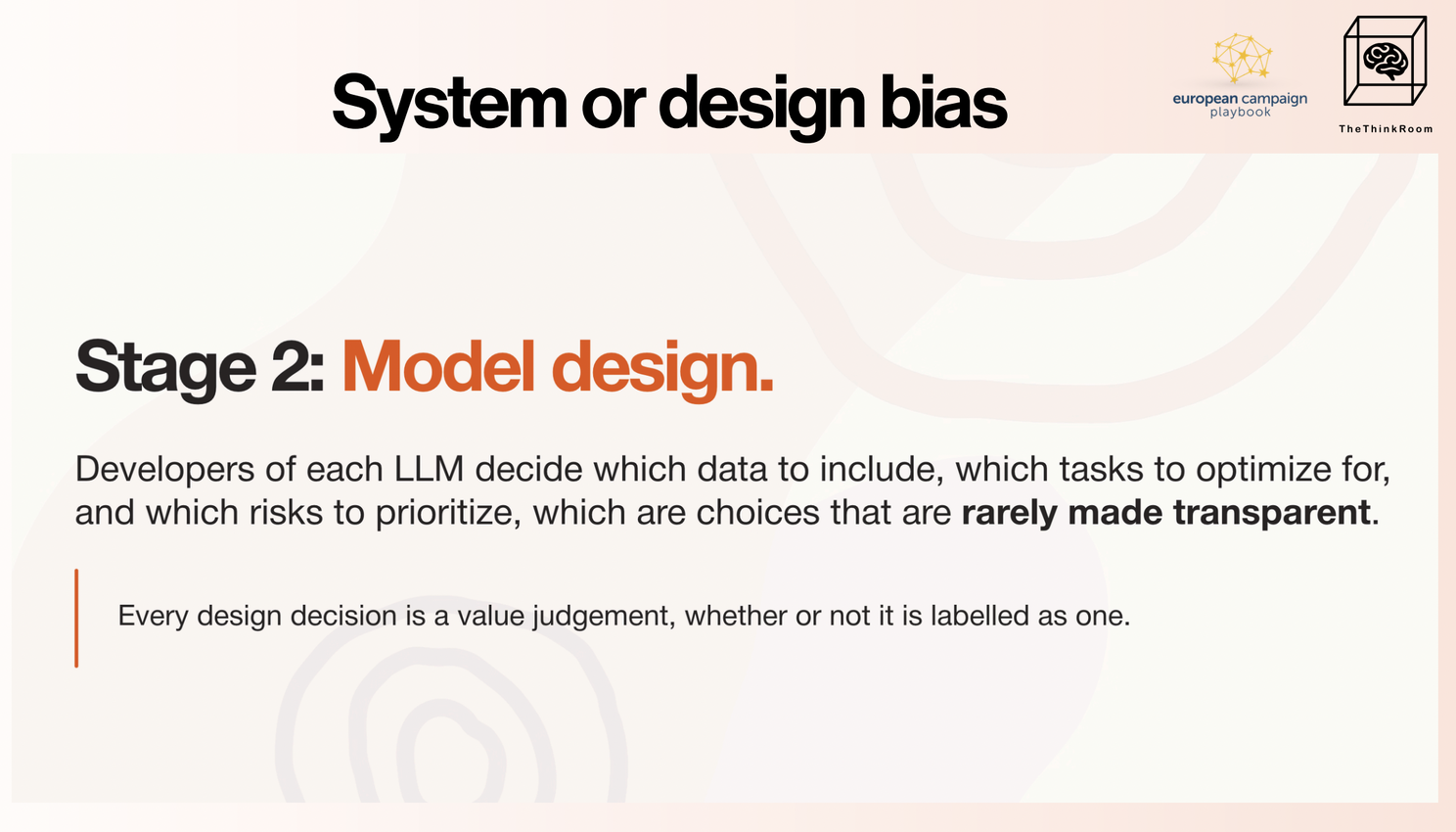
2. System or design bias
Every company decides which data to include, which tasks to optimize, and which risks to prioritize. These decisions are rarely made public. Every design choice is a value judgement, whether a company labels it that way or not.
Source: The Think Room & european campaign playbook
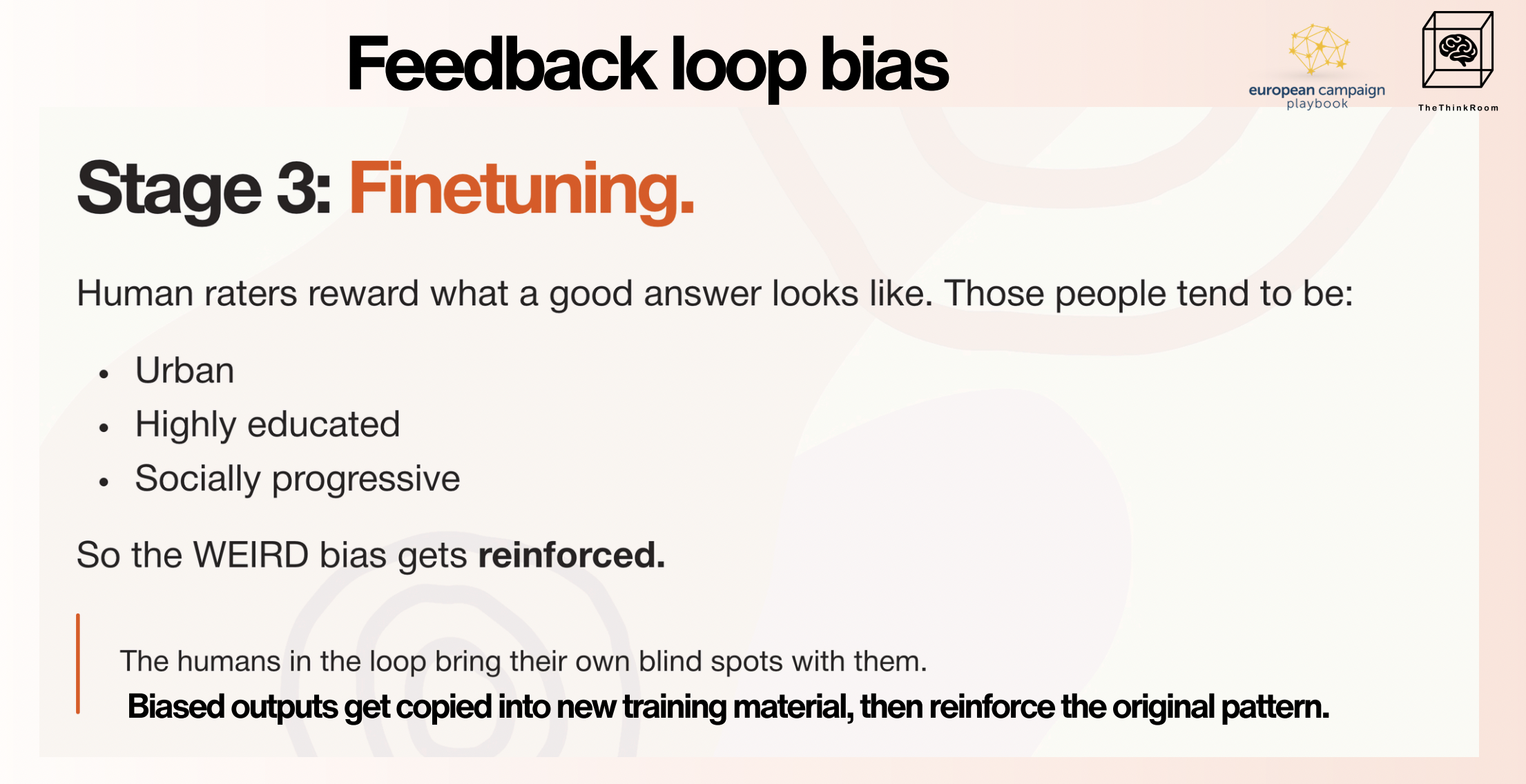
3. Feedback loop bias
Human raters help teach a model what a “good” answer looks like. But the people doing the rating bring their own perspectives to the job. Some analyses suggest they skew urban, highly educated and socially progressive. Instead of cancelling out biases in the training data, that can reinforce them.
Researcher David Rozado demonstrated how sensitive this stage is. As LetsDataScience reported, he built both a working left-leaning model and a right-leaning one using only a small set of curated fine-tuning text. His findings showed that just a handful of tuning passes can shift a model’s answers in either direction.
Source: The Think Room & european campaign playbook
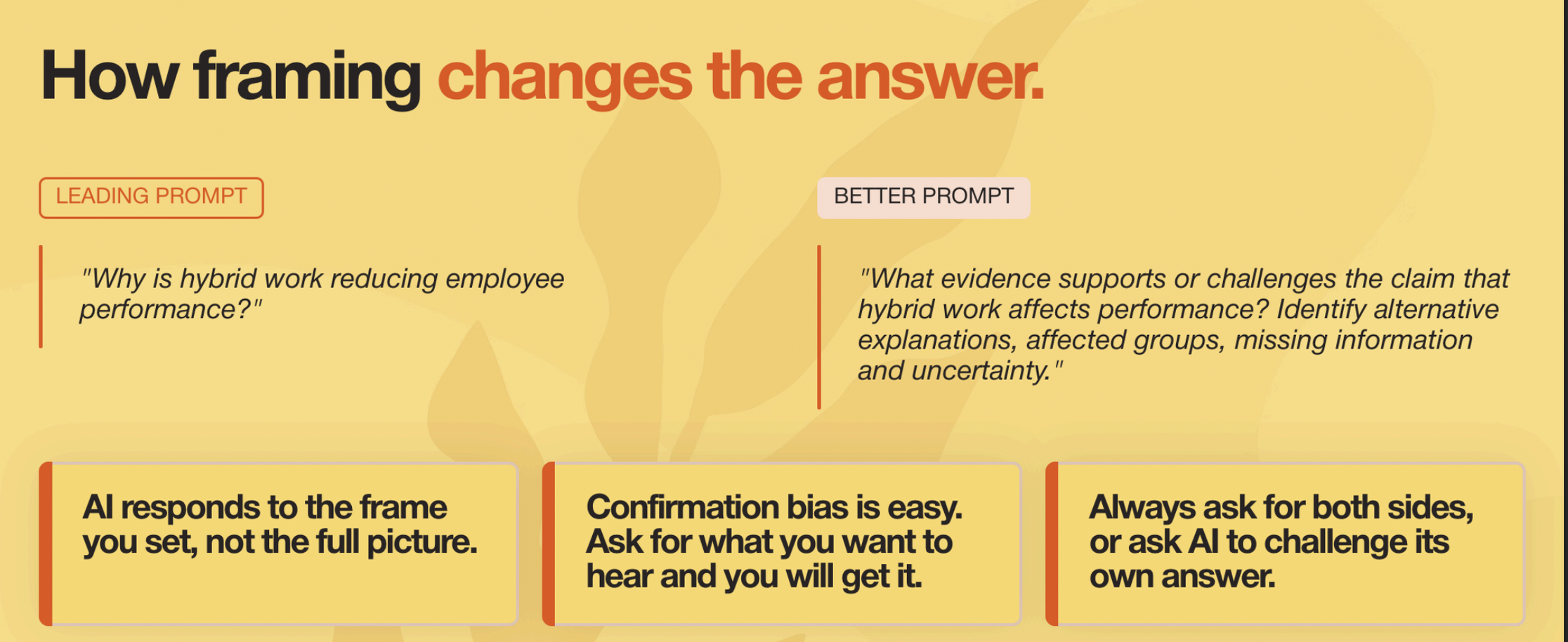
4. Confirmation bias in your own prompts
How a question is framed shapes the answer, and AI rarely challenges the frame it receives. LinkedIn’s editorial desk explored this in a reader discussion on catching AI bias, inviting professionals to share the prompts they use to test an LLM’s blind spots.
Source: The Think Room
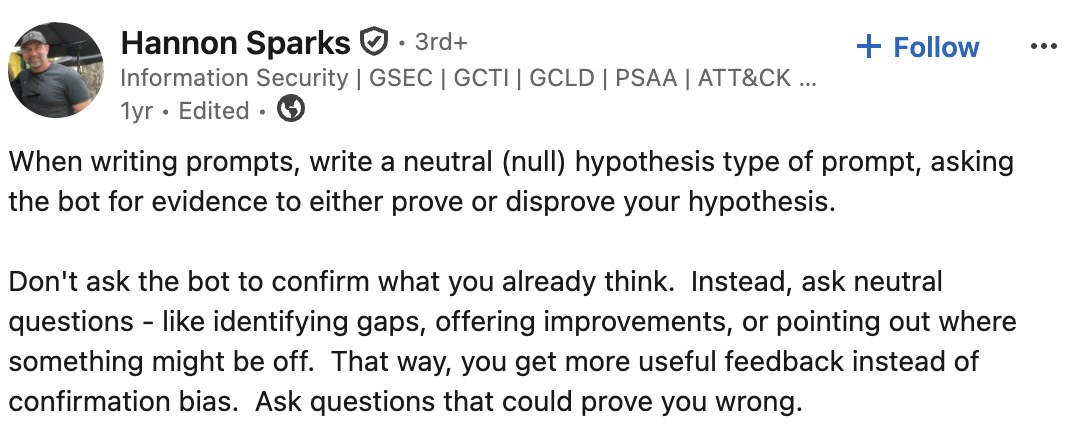
A related post by Hannah Sparks on writing neutral prompts recommends framing a prompt as a null hypothesis, asking the AI for evidence that verifies or disproves a claim rather than confirms it.
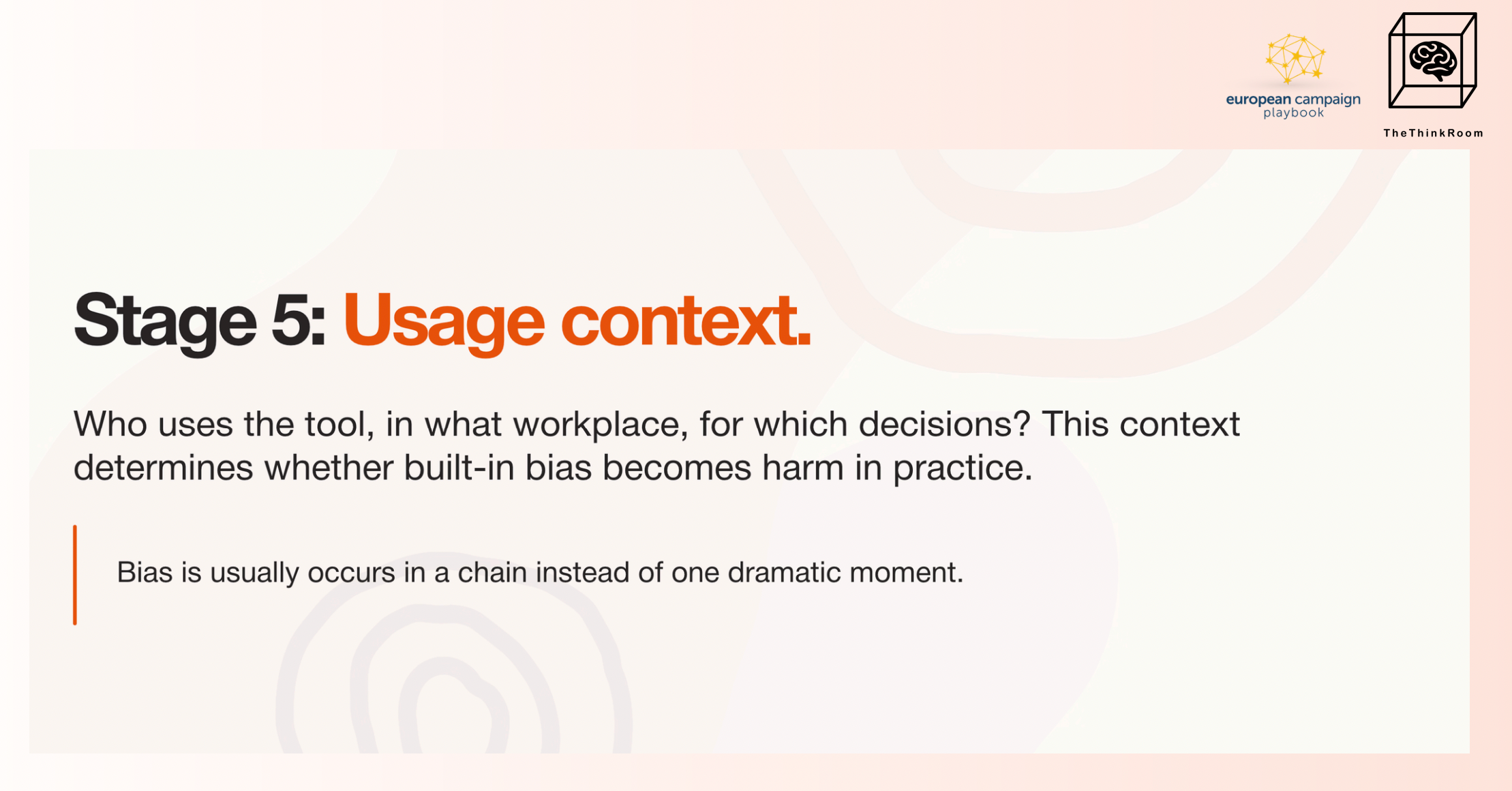
5. Usage context.
Who uses a tool, in what setting and for which decision determines whether its built-in lean stays relatively harmless or turns into real-world harm. Asking for a recipe carries little risk. Asking the same tool to screen candidates or advise on a community whose experience is thin in the training data is a different matter entirely.
A 2026 Stanford study of more than 4 million real job applications shows what that can look like in practice. Researchers found racial disparities in algorithmic candidate screening, with Black and Asian applicants facing adverse impact for a significant share of the jobs they applied to.
Source: The Think Room
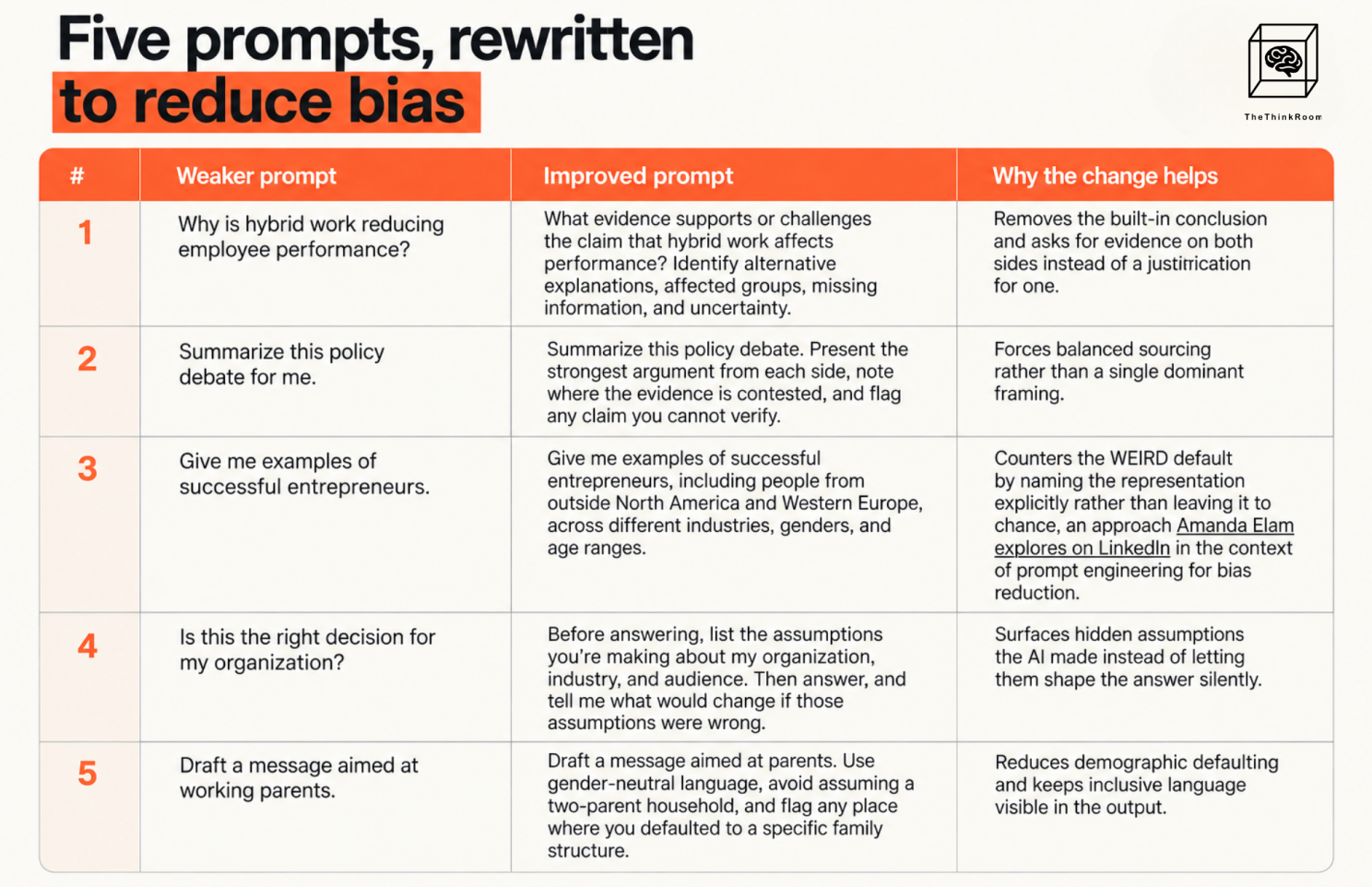
Five prompts, rewritten to reduce bias
These examples show five practical ways to reduce bias in AI prompts: remove built-in conclusions, request competing evidence, broaden representation, surface assumptions and specify inclusive language.
Source: The Think Room
How can you reduce bias when using AI?
Communications and public affairs professionals working with underrepresented groups should pay special attention.
An LLM trained overwhelmingly on WEIRD data has limited grounding in, for example, the lived experience of Roma communities across Europe, and will still produce a confident-sounding answer if asked to advise on it.
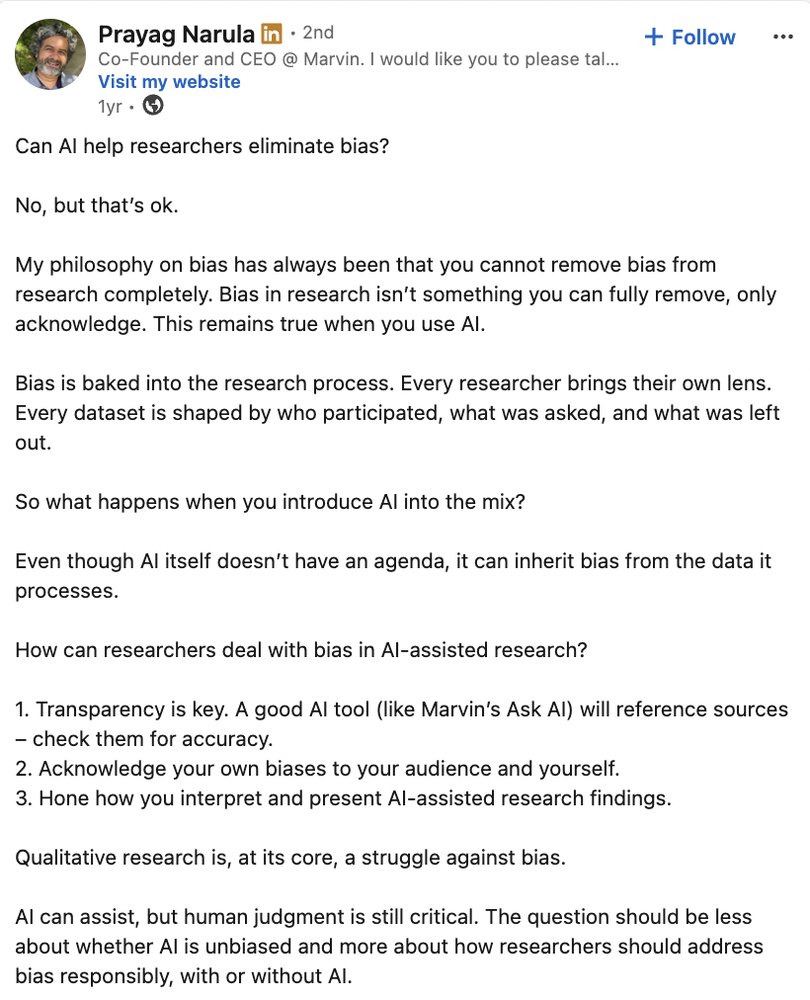
A useful habit, described by Prayag Narula in a LinkedIn post on AI and bias, is to swap the age, gender, ethnicity, or background referenced in a prompt and check whether the tone or recommendation changes. If it does, the original answer had an assumption you should review before it reaches a client or an audience.
Source: Prayag Narula's Linkedin
Another thing that helps: Ask the AI to name its own assumptions before it answers, and to say what evidence would change its conclusion.
Until training data includes a wider set of global voices and fine-tuning teams reflect more than one demographic profile, every layer of the system keeps reproducing the same lean, however carefully a prompt is worded. Disciplined prompting at the one stage an individual actually controls remains the most immediate lever available today.
Thank you for reading, and save this for your next team meeting.
Yours,
The Think Room team
We make you visible, credible and human in the age of algorithms.
P.S. What do you do to avoid bias answers? Share your tips below.
