Stop it, LinkedIn. Why are you showing our posts to the wrong people?

A post gets 80,000 impressions. People in Toronto, São Paulo and three people called Mark react to it. Lovely.
Then a more specific post reaches 1,000 people. 35 people save it. A head of communications sends it to her team. Someone you have wanted to work with for six months finally clicks your profile. Two policy directors reach out to you.
We know which post we would keep.
LinkedIn’s feed is built around relevance. It uses profile details, content and your activity - including whom you interact with and what you spend time reading - to decide what to recommend. Your location, skills, work history, post topic and recent conversations all feed into that decision. LinkedIn’s own guidance says so.
This creates a slightly annoying situation.
You may be writing for EU associations, public-affairs teams, journalists, policy people or prospective clients in Belgium. LinkedIn may decide your post about European communications belongs in the feed of another consultant in Australia.
Useful for your impression count. Less useful if your work happens around Schuman, Place du Luxembourg and the slightly panicked inbox of an association comms lead.
The post that gets the right nod
General observations or puns can get a lot of traction because almost everyone can laugh at them or find them interesting. This is why generic HR accounts with obvious advice about management styles, introverts, and how to treat others can do so well. We all have (had) jobs, we all know these situations, so we all have something to say about it.
The same applies to communication tips.
“Five ways to write better LinkedIn hooks.”
Fine. Interesting for many. But it won't end up in the right hands, if your goal is to reach people in Brussels.
Now try this:
“I have spent the past month looking at how European associations introduce their policy work on LinkedIn. Most are losing readers before the second line.”
That sentence does several things at once.
It tells your readers who the post is for.
It tells LinkedIn what your professional context is.
It gives you a reason to speak: you have been looking at something specific.
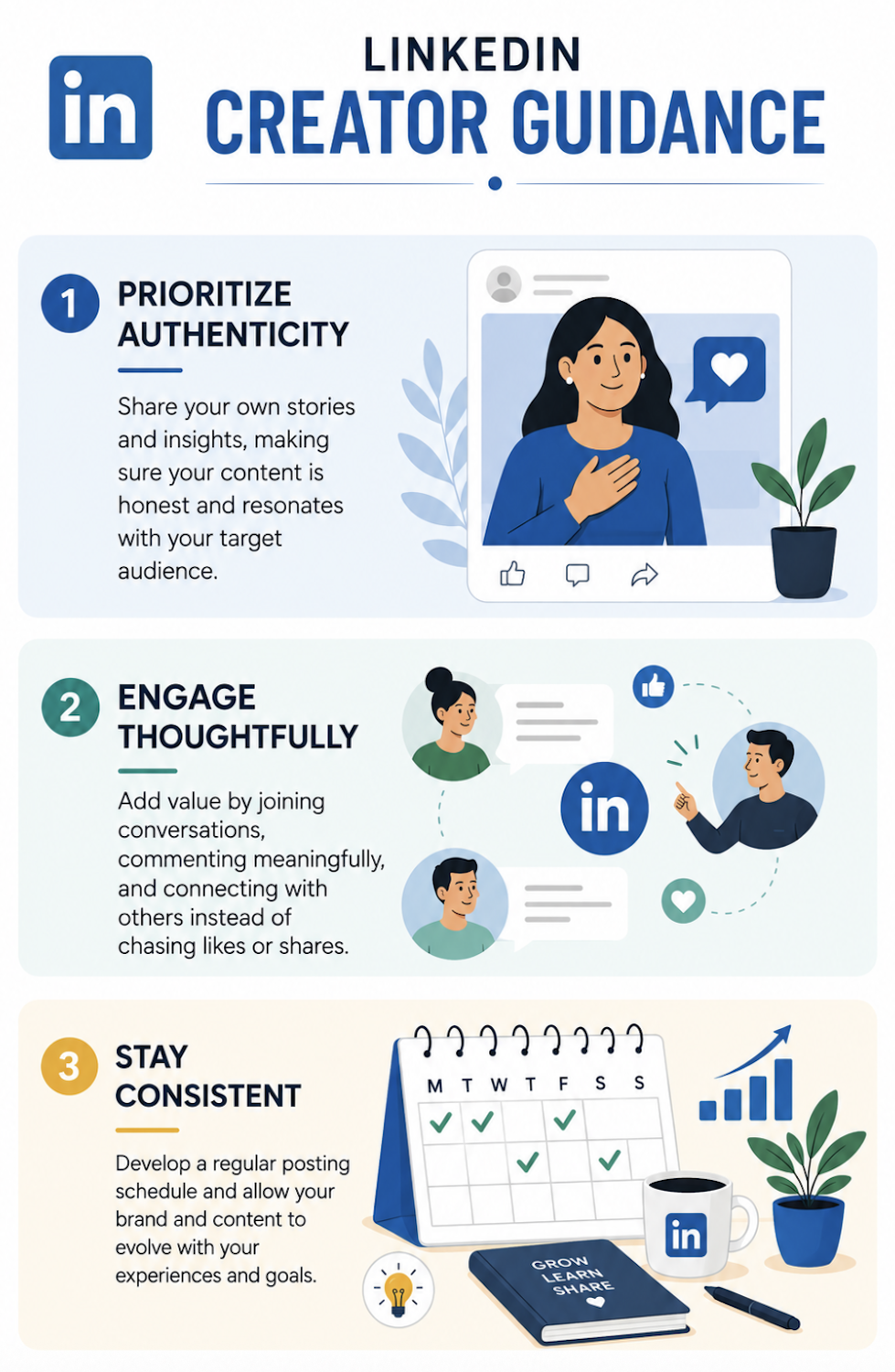
LinkedIn itself advises people to share their own stories and insights, contribute thoughtfully in conversations, and get specific about their niche rather than producing about a wide variety of topic. Take a look at this page with some really useful tips by LinkedIn's top creators
It is very tempting to aim for the highest number of impressions and likes. But take a step back and ask what your LinkedIn goals are, whom you need to reach to meet those goals, and what type of posts would they most likely feel addressed by.
Example: A post aimed at “communications professionals” can become a post for “the one-person comms team at a Brussels association asked to explain another AI policy update to 27 member organizations before Friday”.
That is a person. They can see themselves.
Your audience has a vocabulary
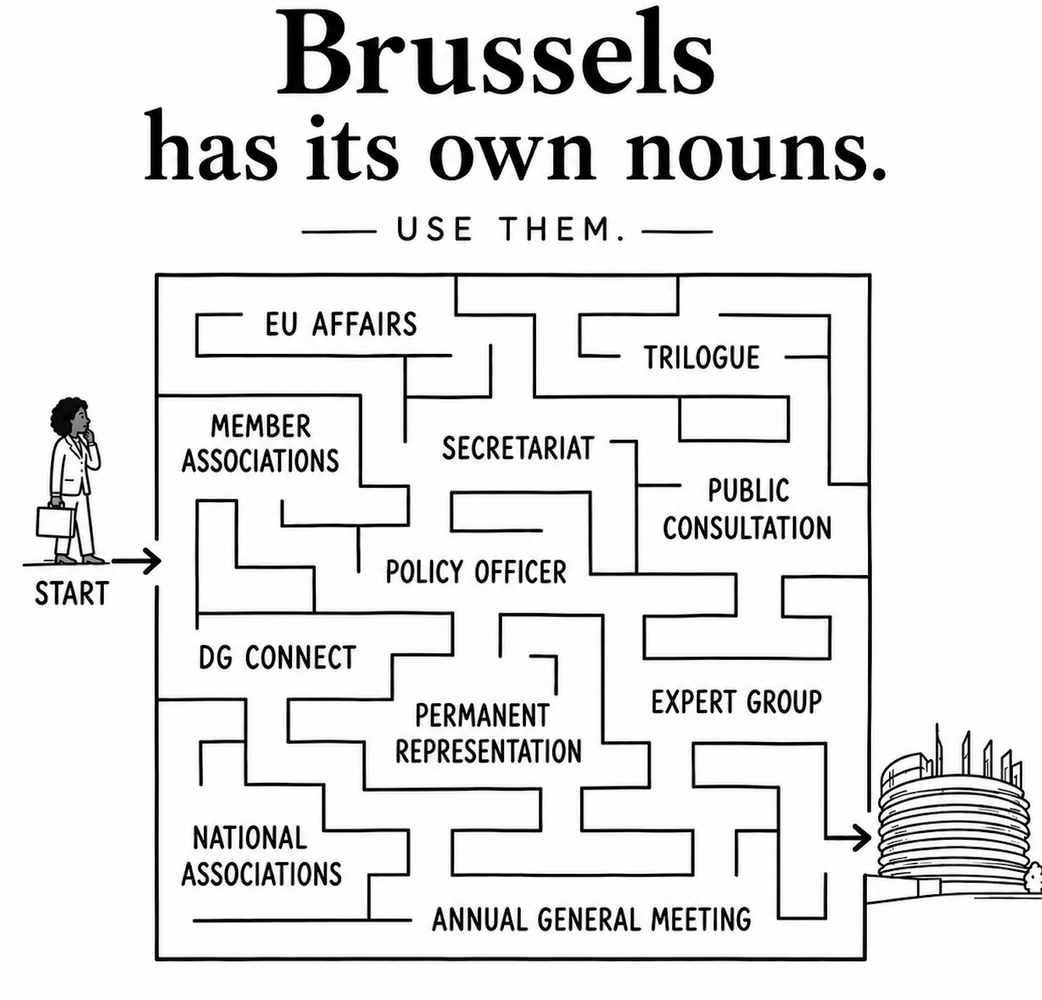
Brussels has its own nouns. Use them.
EU affairs. Member associations. Trilogue. Secretariat. Stakeholder mapping (although, don't use that one, it's terrible). Public consultation. Policy officer. DG CONNECT. Permanent Representation. Expert group. National associations. Annual General Meeting.
Source: The Think Room
These words help the reader decide whether to stop scrolling. They also give LinkedIn clearer context about the conversations you are trying to join.
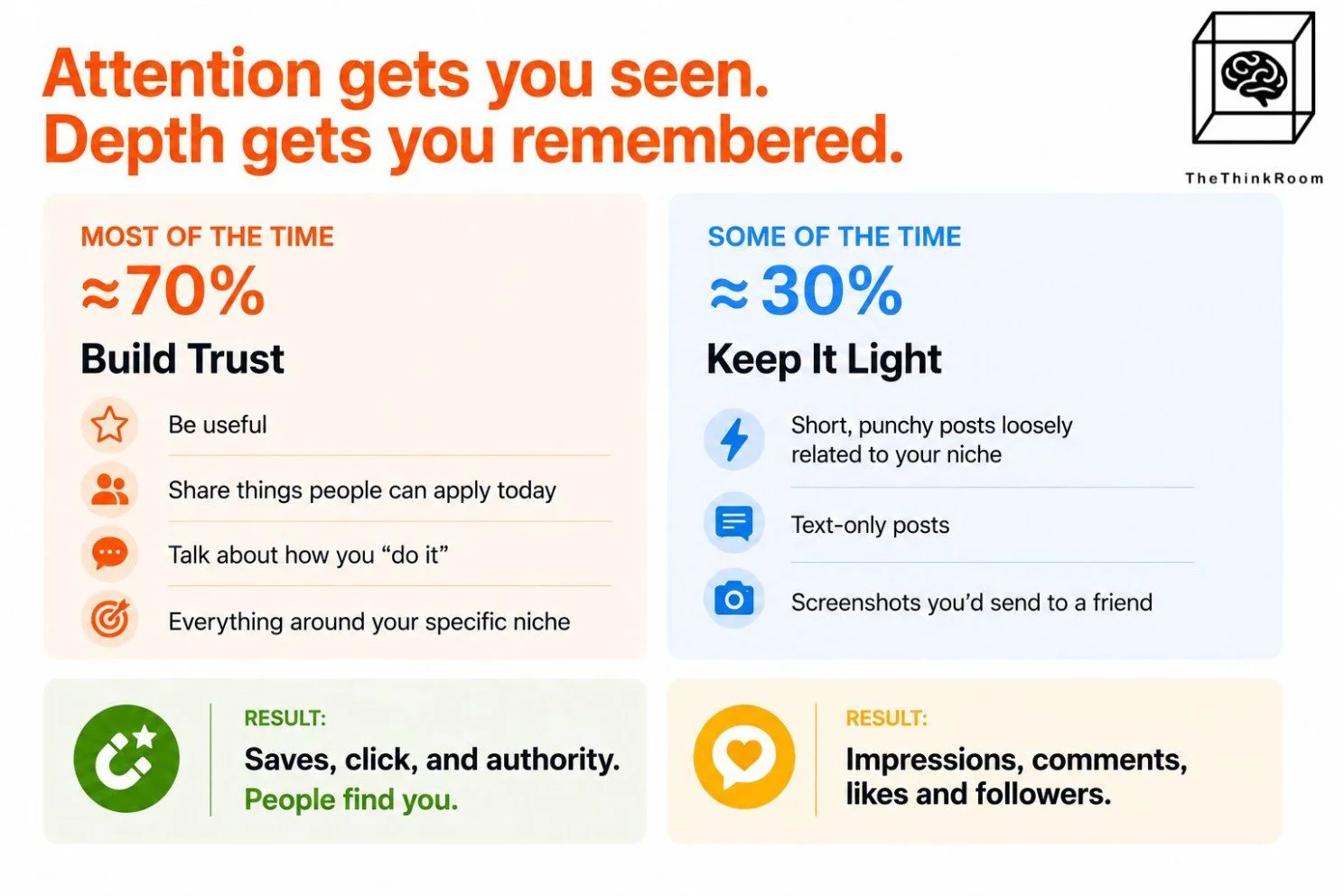
A more generic post can still have a place. Funny observations, personal stories and opinions introduce new people to your work. Keep those. Just surround them with posts that make your actual expertise impossible to miss.
Source: The Think Room
Someone may discover you through a post about Belgian weather, the Brussels Bubble or an accidental encounter near Berlaymont. When they reach your profile, they should immediately understand what you do with the rest of your week.
Source: Liora's Linkedin
Your profile now has a job
A stranger sees a post. They click your name. You have about four seconds before they return to their inbox.
Your profile should answer:
Who do you work with?
What problems do you help solve?
Why would someone in that world trust you?
What should they read, watch or contact you about next
This means:
Your banner needs words, not a decorative skyline. (Why?!)
Your headline needs something that draws your exact audience to you, not a list of vague job titles separated by vertical lines.
Your About section needs a point of view.
Your Featured section needs proof.
A Brussels public-affairs consultant who writes about AI policy, for example, should not leave visitors guessing whether they work on tech regulation, corporate communications, advocacy, AI tools or “strategic impact”.
Give people the answer before they have time to invent the wrong one.
How to optimize your profile with your own DNA (Liora Kern's LinkedIn)
Comments are where people get to know you
A lot of people treat comments as applause.
“Great post!” “Very interesting.” “Thanks for sharing.
Comments work better when you join conversations your audience already cares about. Follow the policy journalists, MEPs, association leaders, think-tank researchers, EU affairs directors and founders whose posts your future clients read. Comment when you can add a real observation, a counterpoint, a useful example or a question that brings the discussion forward.
The same principle applies before a connection request.
Read their posts. Notice what they care about. Comment when you have something worth adding.
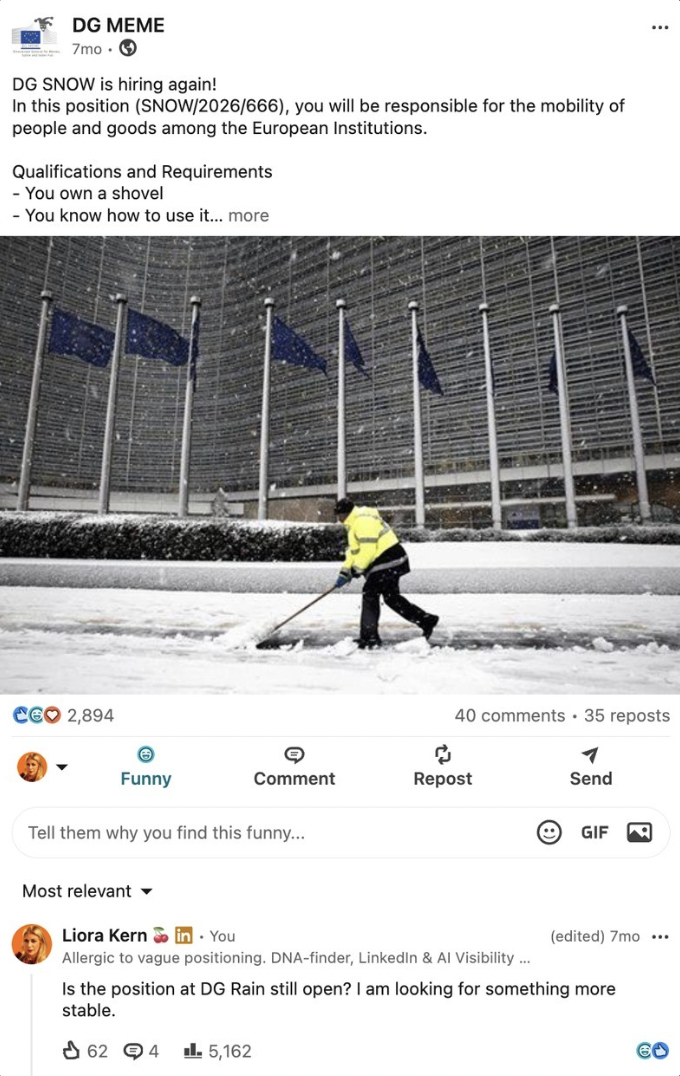
Source: DG MEME
People are far more likely to remember “the person who made that smart point on the post about the AI Act” than “the person who appeared in my inbox with a pitch deck”.
Source: Richard van der Blom's Linkedin
The visible people are only part of it
95% of LinkedIn lurks. They will see your posts. They may even read it multiple times, or print it. Save it or forward it. Recite it to their cat. But never, ever even press like. I know, not nice. But that's how it is.
You may see ten reactions and assume ten people noticed. Meanwhile, a policy director has read the post on the train to Luxembourg, forwarded it to a colleague and looked at your profile. No reaction. No comment. No little celebratory icon.
Research on online participation has found the same pattern for years: most people consume content without visibly contributing, and small minorities produce most public activity.A recent study describes this silent majority as a prevalent form of online participation.
But the silent majority is the group that is most likely to give you the real-life results you are after: The interviews, the jobs, the client work, the speaking gigs.
Source: Information, Communication & Society, 1–20 by Routledge
So measure more than likes. Watch for profile views after a post. Look at who follows you. Notice the names in your DMs. Keep track of workshop enquiries, invitations, referrals and “I have been reading your posts for ages” messages from people who have never once pressed "like".
They are out there. Watching silently. Not willing to show anyone what they "like".
A note on AI labels
Since 2 August 2026, Article 50 of the EU AI Act has introduced transparency obligations around machine-readable marking of AI-generated or manipulated content. The Commission’s guidance draws a distinction between technical marking by providers and disclosure duties for certain public-interest text, with an exception where there has been human review and editorial responsibility.
What this means is still unclear. Can we translate a text? Optimize it? We will keep a close eye on it for you.
Ready to start writing for your your exact audience?
Want to read more tips?
This week’s small assignment
Choose one group you want more of in your LinkedIn world.
Be specific. “Brussels-based heads of communications in European associations” is a group. “Decision-makers” is blah.
Then do four things:
Rewrite one post so the intended reader appears in the opening line
Add the relevant place, role or professional context to your profile where it belongs
Leave three useful comments under posts that group is already reading
Turn one real question from your work into a post before researching another generic tip
Source: The Think Room
Implement our advice, and let us know if this helps you reach more of your people.
The Think Room Team
We make you visible, credible and human in the age of algorithms.
