
Presentation and Camera Training Workshop.
Speaking in public is people's number-one fear. But practice makes perfect.
Speaking at a conference, presenting an idea to the board, answering an unexpected question, looking into a camera and knowing how to..
For many people, these moments come with nerves, overthinking, and the pressure to get every word right.
You might prepare a full script, rehearse your opening twenty times, or worry about what to do if you lose your train of thought.
We've all been there.
At The Think Room, we believe that you need to get out of your own head to get a better speaker, and we will teach you how in a very hands-on workshop filled with exercises. .
Our Presentation and Camera Training Workshop helps you become a more confident, natural, and engaging communicator. Through practical exercises, individual practice, and feedback, you'll learn how to structure your message, manage your nerves, use your voice and body language, and communicate with confidence, whether you're speaking to a room or looking into a camera.
You have the knowledge. You have the experience. Now let's work on how you share it.
What will you learn?
1. Feel more comfortable speaking in front of others.
Public speaking can feel intimidating. The fear of being judged, forgetting what to say, or making a mistake can take your attention away from the people you're speaking to.
We'll explore why speaking in public makes us nervous and how to shift your attention away from yourself and toward your audience.
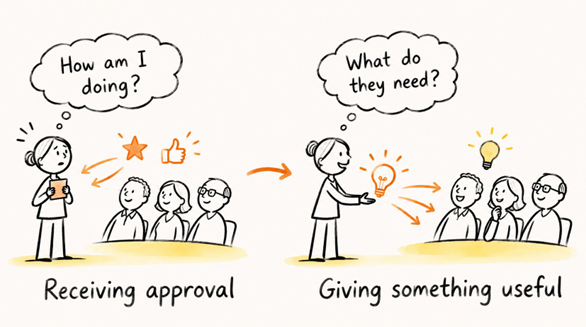
You'll learn to:
Understand why public speaking can trigger anxiety.
Accept nerves instead of fighting them.
Prepare your opening without memorizing your entire presentation.
Focus on what your audience needs to hear.
Use a simple reset to settle yourself before speaking.
2. Make your message clear and memorable.
A good speaker gives people a reason to listen. They make their point clearly, bring energy to the conversation, and make complex ideas easier to understand.
We'll work on how to organize your thoughts and communicate your message without overcomplicating it.
You'll learn to:
Build your message around one central idea.
Use simple speaking frameworks to structure your thoughts.
Start with an opening that gives people a reason to listen.
Turn information and numbers into meaningful stories.
End your presentation on your terms.
3. Use your voice to keep people listening.
The words you use are only part of your message. Your pace, tone, pauses, energy, and emphasis influence how people receive what you're saying.
We'll explore how small changes in delivery can make a big difference.
You'll learn to:
Emphasize the words that matter.
Use pauses to give important ideas room to land.
Vary your tone and energy.
Speak more slowly without losing your audience's attention.
4. Let your body support your message.
Your audience is paying attention to more than your words. Your posture, facial expressions, gestures, and eye contact all contribute to how your message comes across.
We'll look at how to use your body language naturally and avoid movements or habits that distract from what you're saying.
You'll learn to:
Make natural eye contact.
Use gestures with intention.
Maintain an open and confident posture.
Become more aware of facial expressions and physical tension.
Use movement and energy to support your message.
5. Handle questions without losing your way.
Unexpected or difficult questions can throw even experienced speakers off track.
We'll practice responding clearly, acknowledging the question, addressing it directly, and bringing the conversation back to your main message.
You'll learn to:
Listen carefully before responding.
Give concise and relevant answers.
Acknowledge difficult questions without becoming defensive.
Bridge your response back to the point that matters, and how to do that without dodging the question.
Finish your answer with confidence rather than trailing off.
6. Feel more natural in front of the camera.
Speaking to a camera can feel very different from speaking to a room. It can be tempting to memorize every sentence, repeat recordings endlessly, or become overly conscious of how you look and sound.
We'll help you approach camera communication with more confidence and intention.
You'll learn to:
Prepare your opening before recording.
Speak to the camera as if you're talking to one person.
Bring energy and intention to your delivery.
Use your voice, expression, and pace naturally.
Record, review, and identify the changes that make the biggest difference.
How the workshop works.
This is a practical workshop built around participation, experimentation, and feedback.
You'll have opportunities to put the techniques into practice, hear how others communicate, and try different approaches in a supportive setting.
Practice speaking in small groups.
Work in groups of three, taking turns as the speaker, listener, and timekeeper. Practice explaining something you know using simple structures and learn how to make your main message clearer.
Experiment with different openings.
Take the same subject and introduce it in three different ways. Try a question, a surprising observation, or a story. See which opening makes people want to hear more.
Practice answering difficult questions.
Learn to acknowledge a question, answer it directly, and bring your response back to the message you want people to remember.
Record yourself and review.
Record a short presentation, watch it back, identify one or two areas to improve, and record again. The goal is to notice progress, not to criticize everything you do.
Give and receive feedback.
Work with others to identify what is already working and what could make your delivery stronger. Focus on one improvement at a time.
Create your personal speaking playbook.
Bring together the techniques that work best for you. Decide what you'll do before speaking, what you'll remember while presenting, and how you'll get back on track if you lose your way.
Who is this workshop for?
This workshop is for professionals who want to communicate their ideas with greater confidence and clarity.
It is particularly useful for:
Leaders and managers who regularly present ideas, communicate decisions, and speak to teams.
Professionals and subject matter experts who want to make their knowledge easier to understand and share.
Entrepreneurs and business owners who need to present their ideas, explain their work, and connect with different audiences.
Communication and marketing teams who represent their organizations in meetings, presentations, interviews, and videos.
Anyone who wants to speak on camera for video content, live sessions, webinars, interviews, internal communications, or other professional content.
Whether you are an experienced presenter or someone who still feels nervous before speaking, there is always room to improve how you communicate.
What will you take away?
By the end of the workshop, you'll have practiced techniques you can bring into your everyday communication.
You'll leave with:
A better understanding of what makes a speaker engaging.
Practical ways to manage nerves before and during a presentation.
Simple frameworks for organizing your thoughts.
Techniques for stronger openings and memorable endings.
Greater awareness of your voice, pace, gestures, and body language.
Experience speaking in front of others and on camera.
A personal speaking playbook with techniques you want to keep practicing.
Most importantly, you'll have a better understanding of how to use your knowledge, energy, and natural voice to connect with the people you're speaking to.
Meet your trainer
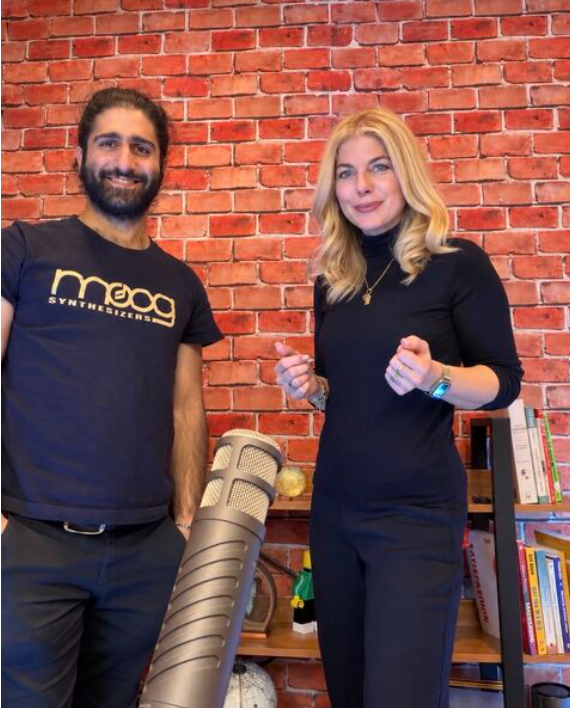
Liora Kern.
CEO and Strategic Communication Expert at The Think Room.
Liora Kern helps people and organizations communicate with greater clarity, confidence, and authenticity.
With experience working across European institutions, multinational organizations, and purpose-driven teams, she understands the importance of making complex ideas accessible and giving people a reason to listen.
Her approach to communication goes beyond getting the words right. It's about understanding what you want to say, why it matters, and how to make your audience feel part of the conversation.
Through this workshop, Liora brings practical techniques, real speaking exercises, and an approachable perspective to help participants become more comfortable sharing what they know.
You have something worth sharing. Start there.
Obama said that being a good speaker starts with conviction and that it's something he had to learn..
You can too!
Let's make that happen.
Interested in presentation and camera training for your team?
Book a meeting with Liora Kern to discuss the workshop and the practicalities.
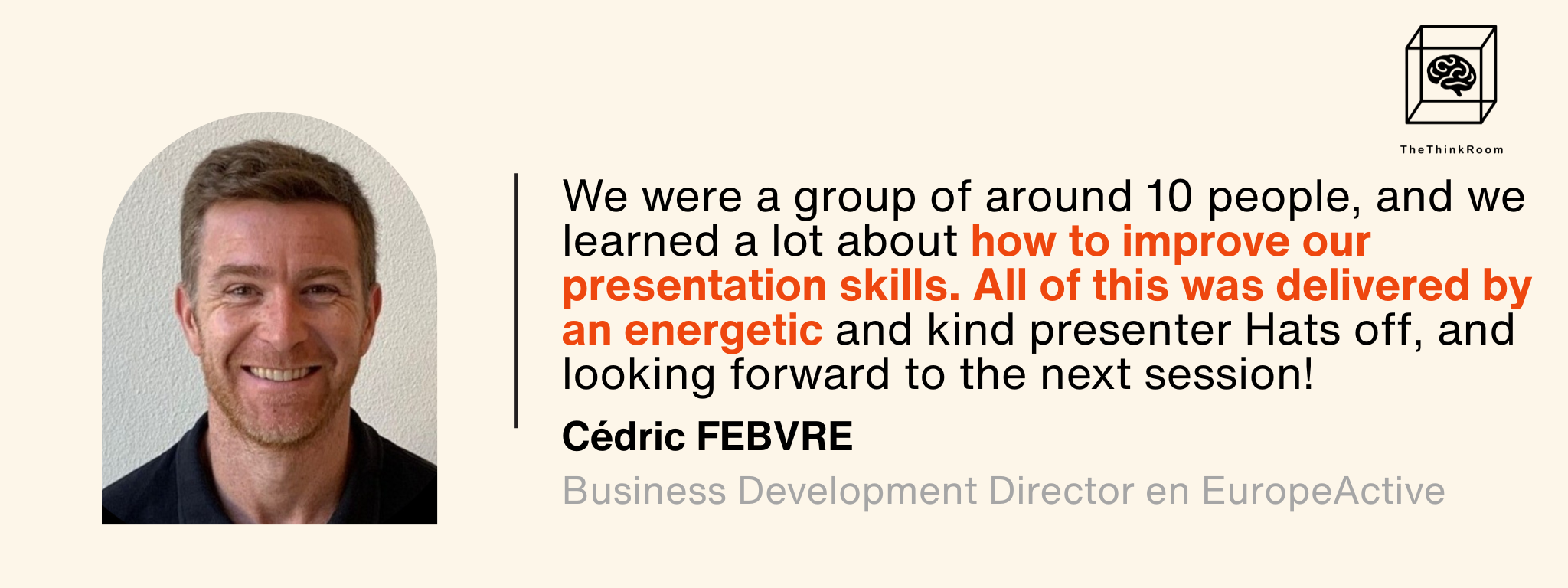
We were a group of around 10 people, and we learned a lot about how to improve our presentation skills. All of this was delivered by an energetic and kind presenter Hats off, and looking forward to the next session!
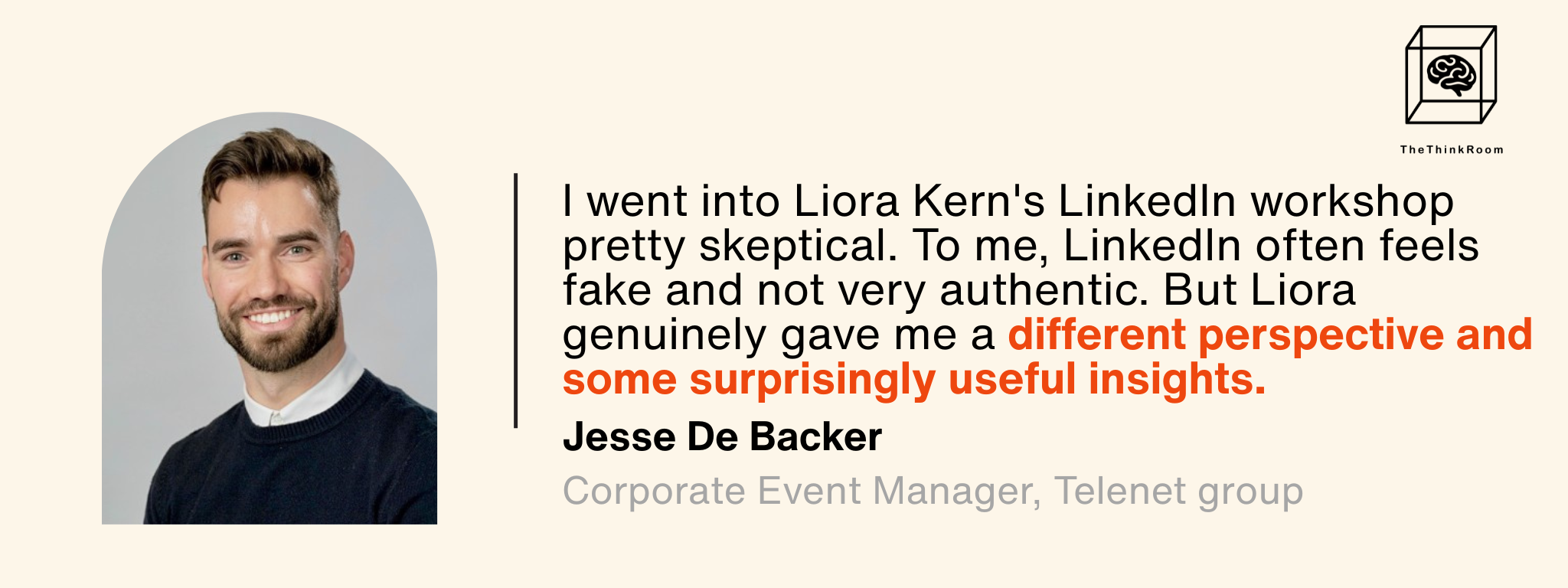
I went into Liora Kern's LinkedIn workshop pretty skeptical. To me, LinkedIn often feels fake and not very authentic. But Liora genuinely gave me a different perspective and some surprisingly useful insights.
Liora gave an inspiring workshop to our teams on Linkedln and Al. She explained complex concepts in a very accessible and engaging way and we learned a lot from her practical insights and examples.
Liora ran a presentation skills workshop for our team and it was a real highlight for all of us. Her energy is contagious and she made stepping out of our comfort zone feel easy. We worked on public speaking and speaking on camera, and I came away with practical tools I'll keep using in my career.
Liora quickly understood our needs and created a well-structured, highly productive workshop that was greatly appreciated by our participants. I can only thank her for the excellent work!
The interview was inspiring, and I really enjoyed reading my DNA Key. The positioning offered valuable insights that have already sparked new ideas and conversations beyond LinkedIn. I've felt truly energized by it!